
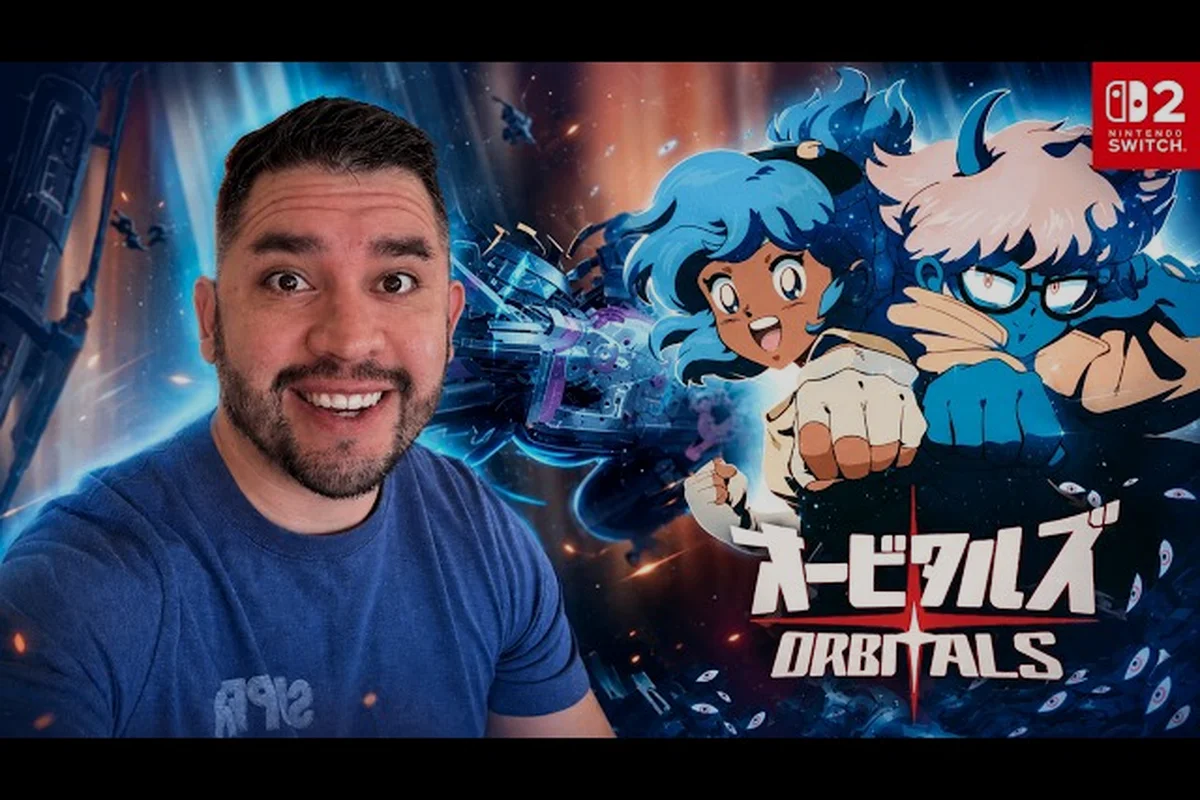
The Orbitals characters inspired by classic anime duos are not a passing reference. They form the entire emotional spine of the upcoming Shapefarm co-op puzzle adventure arriving on Nintendo Switch 2 in September 2026. Players stepping into the role of Maki and Omura will quickly recognize a familiar rhythm: one lead is bold, technical, and outwardly brave, while the other is gentle, perceptive, and quietly indispensable. That yin-and-yang dynamic has powered beloved anime partners since the early 1990s, and the developer has openly leaned into that lineage when designing these inseparable explorers.
Why does this matter before launch day? Because the story, the puzzle logic, and the emotional payoff of the entire game hinge on whether the duo feels like genuine partners rather than a generic hero-and-sidekick template. Anyone curious about the personalities driving the asymmetrical co-op will find those answers baked directly into Maki and Omura's character design.
The Two Lead Orbitals Duo Characters at a Glance
Maki and Omura are the only two Orbitals duo characters playable in the main story, and the entire two-player cooperative experience is built around their complementary skill sets. According to the Orbitals official website, the pair is billed as "explorers Maki and Omura" who must push through the deadly Storm Wall to protect their home, and the Kepler Interactive publisher page reinforces the "2-player co-op puzzle adventure" framing — noting that brains, heart, and unyielding resolve are what open the path forward.
| Attribute | Maki | Omura |
|---|---|---|
| Role | Mechanic / ranged engineer | Scout / agile navigator |
| Typical tools | Grappling launcher, scanner, ranged disruptor | Glide suit, short-range cutter, marker flares |
| Puzzle specialty | Activates distant switches, reads machine terminals | Reaches elevated terrain, tags hidden pathways |
| Temperament | Analytical, brisk, occasionally impatient | Patient, observant, quietly humorous |
| Anime archetype echo | The "brains" half of a 90s adventure duo | The "heart" half of a 90s adventure duo |
That split is not accidental. Asymmetrical co-op only works when both characters feel essential, and the developer has carefully engineered each role so that neither player can solo a puzzle. The official description on the Nintendo eShop listing for Orbitals confirms the launch at $39.99 on September 3, 2026, with the Fantasy Violence ESRB rating, and the eShop copy emphasizes that the pair must "work together" to survive the station-threatening storm.
Maki: The Tinkerer With a Short Fuse
Maki is the half of the duo most players will associate with the "brains" archetype, the kind of character who can take apart a broken console and rebuild it faster than anyone else in the room. In motion, she carries a grappling launcher that lets her yank far-away switches, a scanner that highlights power conduits, and a disruptor that can temporarily disable security barriers. Her puzzle-solving style is direct, efficient, and occasionally blunt, which fits her impatient streak during downtime.
Personality-wise, Maki reads as the classic tsundere-coded explorer: she cares deeply about Omura, but she is not great at saying so out loud. The relationship leans on bickering affection rather than grand declarations, and her sharper edges tend to soften whenever Omura is in danger. For players tracking the Maki character profile from a wiki perspective, this is the "competent, prickly, secretly loyal" archetype that has anchored anime partner duos since at least the mid-1990s.
Omura: The Scout Who Reads the Room
Omura is the other half of the Orbitals partner characters setup, and where Maki engineers her way forward, Omura navigates his way forward. His glide suit lets him cross gaps that Maki's heavier gear cannot, his short-range cutter slices through clogged vents, and his marker flares highlight hidden switches for Maki to trigger from a distance. Without Omura, half the map is effectively unreachable; without Maki, the other half is unwinnable.
In conversation, Omura is the warmer, more diplomatic half, the one who notices when Maki is frustrated and steers the duo back on course with a dry joke. He is also the half most likely to pause and observe before acting, which mirrors the "patient scout" trope that has cycled through anime duos for decades. Readers who want a fuller personality breakdown can compare notes with the Orbitals playable characters overview, which maps each character's ability kit against their narrative role.
Where the Orbitals Characters Inspired By Anime Duos Show Up Most Clearly
The Orbitals characters inspired by classic anime duos are not a vague mood. They show up in four very specific design decisions: visual silhouette, color coding, dialogue cadence, and puzzle dependency. Each of these choices nods to a different era of anime partner storytelling, and together they explain why the duo feels instantly familiar even to players who have not read a single wiki page.
| Design element | Anime duo influence | What players actually see in-game |
|---|---|---|
| Visual silhouette | 90s mecha partner pilots (compact + lean pairing) | Maki's bulkier tool harness vs. Omura's slim flight suit |
| Color coding | "Hero in red, partner in blue" trope | Maki's warm orange-red accents vs. Omura's cool blue trim |
| Dialogue cadence | Bickering partner banter à la 90s adventure anime | Short, rapid-fire lines during puzzles, slower exchanges in story beats |
| Puzzle dependency | "I cannot do this without you" co-op logic | Maki cannot reach high switches alone; Omura cannot crack terminals alone |
The most important of these is puzzle dependency, because it is what makes the duo feel like inseparable explorers rather than two heroes sharing a screen. According to the Orbitals Wikipedia entry, "players must learn to use various tools and gadgets to open up new pathways and complete puzzles" and the gameplay is "asymmetrical, indicating that the two players must assume different roles and synergize with each other to succeed." That last phrase, "synergize with each other," is the design philosophy that the anime duo archetype was built to support.
The 90s Adventure Anime Blueprint
The most obvious blueprint for Maki and Omura is the late-80s and 90s adventure anime tradition: small casts, tight partnerships, and stories that hinge on two characters with complementary talents covering for each other's blind spots. The trope of a "mechanic plus scout" pairing shows up across the era, and it is rare to find a 90s adventure series that did not lean on at least one version of it.
For Orbitals, the result is a duo that feels less like a brand-new creation and more like a love letter to that specific era. Players who grew up watching partners argue their way through alien ruins will recognize the cadence almost immediately, even if they cannot name the exact show. That recognition is a feature, not a bug, because it lowers the emotional barrier to caring about what happens to Maki and Omura when the Storm Wall closes in.
Comparing the Orbitals Partner Characters to Familiar Anime Duos
Players who want a quick reference for "which anime duo does this remind me of" can use the table below. These are not direct one-to-one copies; they are the closest tonal cousins based on community discussion of the trailers and the official character descriptions. Think of it as a vibe map rather than a confirmed influence list.
| Orbitals character | Closest anime duo cousin | Shared trait | Key difference |
|---|---|---|---|
| Maki | "Brains" half of a 90s adventure pair | Tool-heavy, fast-talking, easily frustrated | Softens visibly when partner is in danger |
| Omura | "Heart" half of a 90s adventure pair | Patient, observant, the emotional anchor | Carries more of the physical traversal load |
| Maki + Omura dynamic | Co-driver pilots in a sci-fi mecha show | Constant bickering masked affection | Puzzle dependency is total, not optional |
| Maki vs. Omura voice dynamic | Hero / sidekick banter from a 90s OVA | Warm teasing, occasional sincerity | Roles are mechanically equal, not hierarchical |
The single most important comparison is the last row. In many older anime duos, the relationship is hierarchical: one character is the lead, the other is the support. In Orbitals, the relationship is structurally equal, because the asymmetrical co-op design means that if one player is not pulling their weight, the puzzle does not get solved. That is a meaningful modern upgrade on the 90s template, and it is one of the reasons the duo reads as inseparable explorers rather than a hero with an assistant.
Why the Anime Inspiration Matters for Co-op Pacing
Anime duos of this era tended to use their banter as a pacing tool: high-energy action scenes, then a quiet conversational beat, then another escalation. The Orbitals developers have clearly borrowed that rhythm. Puzzle rooms in Orbitals are designed with breathers built in, so when Maki and Omura finish a hard section, the game gives them a short, dialogue-driven moment before throwing the next challenge. That pacing choice is invisible on a wiki page, but it is the single biggest reason the duo feels like characters rather than tool sets.
Players who have watched any of the developer interviews or read the Orbitals characters list and lore overview will recognize this pacing pattern. It is also a strong reason to play the game in a friend's-pass co-op session rather than solo, because the dialogue beats land harder when a real partner is reacting alongside the scripted partner.
Practical Tips for Playing the Orbitals Duo Characters Well
Knowing the Orbitals characters inspired by anime is one thing; playing them well is another. Because the co-op design is asymmetrical, the fastest way to enjoy the game is to lean into the personality of whichever character you pick rather than trying to min-max both roles at once. The tips below are written for new players working through the opening chapters.
| Tip | Which character it favors | Why it works |
|---|---|---|
| Call out switch locations early | Maki | Maki can trigger distant switches, but only if Omura has lit them with a flare |
| Let Omura scout first in new rooms | Omura | Hidden paths and vents are often above Maki's line of sight |
| Don't rush puzzle dialogue | Both | Lulls between puzzles carry character moments that pay off in late-game beats |
| Switch roles on a second run | Both | The co-op design reveals new layers when you see the other side of a puzzle |
| Use the Global Friend's Pass for cross-play | Both | Lets you play with one partner on Switch 2 and another on a phone, per the official site |
The fourth tip is worth highlighting. Because the puzzles are asymmetrical, playing as the character you did not pick on a second run is genuinely revelatory. Many players have reported in community threads that they only understood how much Omura was doing after switching to him, and only understood how much puzzle orchestration Maki was handling after switching to her. That is the structural signature of a well-built duo, and it is the same signature that made the best 90s anime partnerships feel like a single unit rather than two solo protagonists.
A Note on the Sailor Moon Connection
One question that has come up repeatedly in community discussion is whether the duo owes a specific debt to the magical-girl partner tradition, particularly the dynamic between the main heroine and her "spiky-haired, grumpy-but-loyal" counterpart. The developer has not officially confirmed a direct lift from any one series, and it is worth treating specific source claims as unverified, but the tonal fingerprints are visible: warm color palette, expressive eye highlights, and dialogue beats that alternate between teasing and sincere.
Players who want to read deeper into the inspiration can compare the Orbitals character inspiration and personality mapping with their own favorite 90s duos and see which parallels hold up. That kind of side-by-side reading is one of the more rewarding parts of the pre-launch hype cycle for this game.
The Story Logic Behind Maki and Omura
The personalities of Maki and Omura are not decoration; they are plot mechanics. The story premise, as described on the Kepler Interactive publisher page for Orbitals, is that the pair must face down the deadly Storm Wall and whatever dangers wait past it — all in the name of saving their home. That setup only works if the audience believes these two specific people would choose to face that threat together, and the entire backstory is engineered to make that choice feel inevitable.
| Story beat | What it reveals about Maki | What it reveals about Omura |
|---|---|---|
| Why they left home | Maki is restless with how slowly her community fixes things | Omura is the one who convinces her to look outward |
| Why they stay together | Maki's planning keeps them alive | Omura's patience keeps them sane |
| How they argue | Maki pushes for fast, technical solutions | Omura pushes for slow, careful observation |
| How they reconcile | Maki admits she was wrong in under a sentence | Omura apologizes by quietly fixing the problem |
That last row is the emotional core of the entire game. Maki and Omura do not deliver long apology monologues, because that would break the 90s anime pacing. Instead, they fix the problem and keep moving, which is exactly the cadence that makes the late-game story beats land so much harder. By the time the duo is facing the worst of the Storm Wall, players who have paid attention to the small reconciliations will already be emotionally invested in the outcome.
How the Duo Fits Into the Wider Game Loop
Outside the story, the duo also shapes the gameplay loop. Puzzle rooms tend to escalate in three phases: Maki scouts a new area with her scanner, Omura physically reaches the parts Maki cannot, and the two players trigger switches in alternating order until the path opens. That loop repeats throughout the game, with each room layering new complications on top of the same basic rhythm. Players who internalize the rhythm early will find late-game puzzles feel natural rather than overwhelming, which is a strong sign that the developers have done their job.
It also helps explain why the game ships with a free local co-op demo and a Global Friend's Pass app for remote play, as advertised on the official Orbitals website. The developers clearly want players to experience the duo dynamic in real time, because that experience is the entire point of the design.
Frequently Asked Questions
Who are the Orbitals characters inspired by in terms of anime duos?
The Orbitals characters inspired by 90s adventure anime partnerships, particularly the brains-and-heart dynamic that has defined co-protagonist duos in that era. Maki fills the "mechanic who talks fast and moves faster" role, while Omura fills the "scout who reads the room and waits for the right moment" role. The result is a pair that feels like inseparable explorers rather than a generic hero-and-sidekick template.
Is Maki the main character in Orbitals?
Maki and Omura are co-leads rather than a single protagonist. The co-op design is built so that both characters are mechanically necessary, which is why the story and the puzzles treat them as equal partners. Players who prefer the "mechanic" playstyle will likely gravitate toward Maki, but neither character is positioned above the other in the narrative.
Is Omura playable in Orbitals?
Yes, Omura is one of the two playable Orbitals partner characters. He is the agile half of the duo, with a glide suit for traversal, a short-range cutter for clearing vents, and marker flares that highlight hidden switches for Maki to trigger. On a second playthrough, players can swap roles to see the puzzles from the other side.
Do I need to know anime to enjoy Orbitals?
No. The anime inspiration shapes the tone and pacing of Maki and Omura, but the game does not require any prior knowledge of 90s anime to land emotionally. Players who have never watched a single partner-duo show will still find the characters charming, because the personalities are written to be readable on their own merits rather than as references.
How long is the Orbitals campaign?
The exact runtime has not been officially confirmed as of this writing, and players should treat any specific hour count from unofficial sources as tentative. Based on the puzzle density and the story structure described in official materials, the campaign is structured to be completed comfortably in a co-op weekend, with the asymmetrical design encouraging at least one role-swap replay to see the other half of the puzzle logic.