
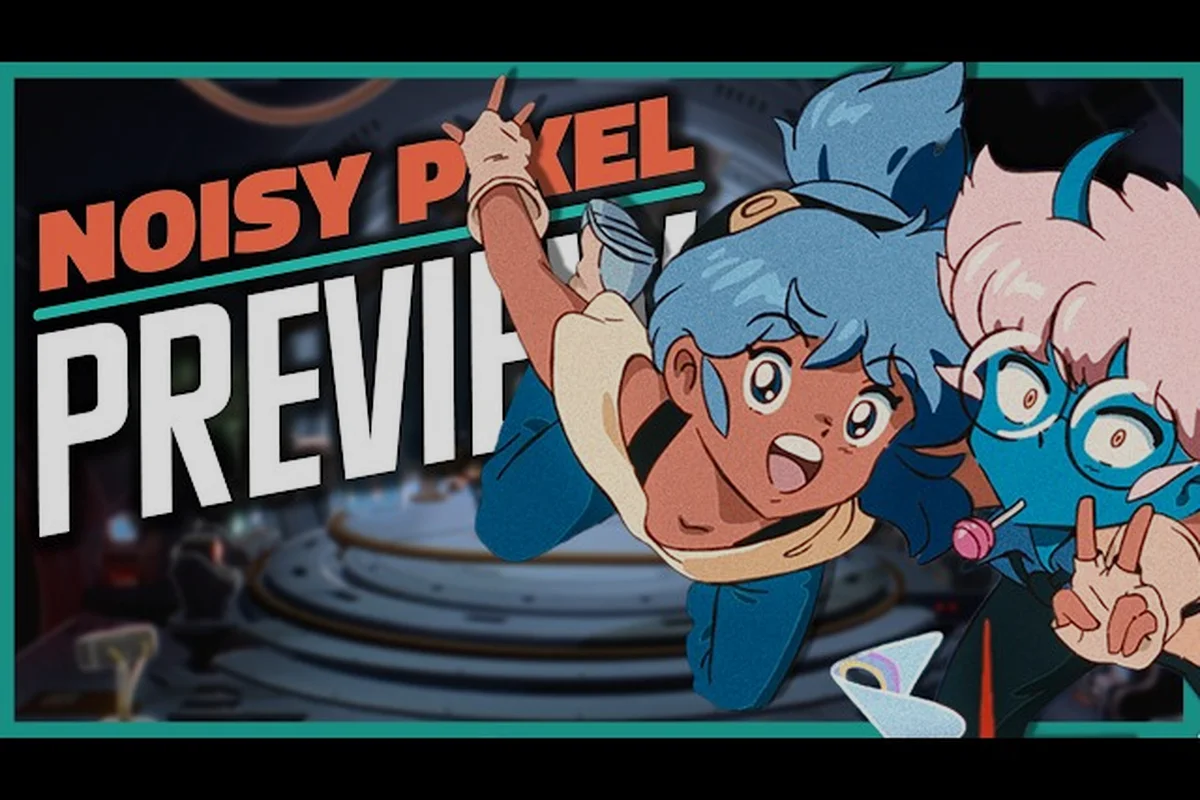
Looking for an Orbitals casual guide that keeps the two-player co-op experience light and fun? Orbitals is a puzzle-adventure built around explorers Maki and Omura working together to outrun a deadly storm creeping across a fragile space station. Casual players can settle in at a relaxed pace because most stations are designed for short play sessions, and the mechanics reward steady communication over twitch reflexes. The game launches on September 3, 2026, exclusively for the Nintendo Switch 2, so you can pair Joy-Con controllers or use the Global Friend's Pass for a couch session with whoever is sitting next to you on the couch.
What Makes Orbitals Feel Casual-Friendly
Orbitals leans into asymmetrical cooperation, which means each player picks up a different role instead of mirroring the other. That role split actually reduces the pressure you normally feel in a co-op puzzle game because you do not need to memorize every gadget at once. The official site highlights the relaxed onboarding on the Orbitals Official Game Website, where the Ways to Play section, the free local co-op demo, and the Global Friend's Pass free app are all framed as low-friction entry points for newcomers.
| Casual-Friendly Element | What It Means In Practice |
|---|---|
| Asymmetrical roles | One player pilots, the other stabilizes or scans |
| Friend's Pass | Only one copy of the game is needed for two-player co-op |
| Short station puzzles | Most levels resolve in 5-10 minutes, ideal for couch sessions |
| No fail-state pressure | Players can respawn quickly and retry the same puzzle |
| Demo availability | A free local co-op demo lets you test the game before launch |
If you have ever bounced off a co-op puzzle game because the difficulty spikes, Orbitals for beginners is a friendlier starting point. The puzzle design tends to introduce one new tool or concept per room, then remix that concept across two or three follow-up rooms so the learning curve stays gentle. That design philosophy is also why an Orbitals casual guide is worth keeping open during your first few hours — small reminders about which gadget does what go a long way when the on-screen prompts are flying past during a tense storm warning.
Setting Up A Relaxed Two-Player Session
Comfort matters as much as game design when you want a casual session, so a little setup goes a long way. The Nintendo Switch 2 version supports split Joy-Con play, full controller pairs, and a free Friend's Pass companion app, which means you can mix and match how each player joins. If your couch co-op partner has never held a Joy-Con before, the simplest setup is a single pair of Joy-Cons attached to the console so the controls map directly to Maki and Omura's most-used actions.
Picking The Right Roles For Casual Play
The game gives you two distinct roles, and which one each player takes shapes the entire tone of the session. The pilot handles movement and navigation through the station corridors, while the stabilizer manages tools, scans, and environmental interactions. When you are aiming for a relaxed pace, hand the stabilizer role to the player who likes to think ahead and the pilot role to the player who enjoys exploring because that pairing usually produces the fewest stuck moments.
| Role | Best For | Tools You Will Use Most |
|---|---|---|
| Pilot (Maki) | Players who like to move and explore | Boost, Brake, Quick Turn |
| Stabilizer (Omura) | Players who like planning and tool use | Scanner, Tether, Field Anchor |
A friendly rule of thumb for casual play is to switch roles every station so neither player gets stuck in a rut. Players who normally rush ahead will slow down when they become the stabilizer, and the planning player will gain a sense of momentum when they take the pilot seat. If you are following an Orbitals tips and tricks list, the role-swap habit is consistently the single most recommended practice by community playtesters because it prevents fatigue and surfaces gadgets each player might otherwise ignore.
Choosing Your Session Length
Orbitals stations vary in length, but most side puzzles are designed to wrap inside ten minutes, while the main story stations sit closer to twenty. That pacing works beautifully for an evening session because you can knock out three or four stations in an hour and feel a sense of progress without committing to a marathon. Casual players often report that they stop after one story chapter and one optional station because the game's save-anywhere system makes it easy to pick up exactly where they left off.
Orbitals Tips And Tricks For Beginner Co-Op
Every Orbitals tips and tricks list starts with the same foundational advice: talk to your partner before each station. The game does not punish silence, but it certainly rewards a quick "I'll scan the left door while you boost through the right" callout. Because the puzzles lean into timing-based swaps between pilot and stabilizer, even a five-second plan saves minutes of trial and error later. A common pattern reported by community playtesters is that pairs who narrate their actions out loud clear rooms roughly thirty percent faster than pairs who rely on silent trial and error.
Communication Habits That Lower Stress
The single biggest stress reducer in Orbitals is a shared mental map of the station. Each room contains a small set of interactable elements, and labeling them out loud keeps both players oriented. The orbit mechanic that drives most puzzles requires both players to be in specific positions at specific times, so a quick "I am on the platform, ready to boost" is often all the coordination you need.
-
Call out the gadget you are using: it saves the other player from guessing which tool is active
-
Name the room before leaving: "We cleared the airlock, moving to the antenna bay" keeps the map in sync
-
Flag stuck moments early: a fast "I cannot see the next switch" is better than a five-minute silence
-
Celebrate small wins: a quick "nice tether" reinforces the team dynamic and keeps the mood light
These habits sound small, but they add up. Casual players who treat every station like a friendly puzzle room rather than a performance test tend to enjoy the game for far longer, because the failure state in Orbitals is genuinely forgiving. According to the eShop listing on the Orbitals for Nintendo Switch 2 page, the game ships with a Fantasy Violence ESRB rating, which signals that the design team kept combat low-impact and focused on the puzzle loop.
Building A Comfortable Difficulty Curve
If you want Orbitals pro tips from casual players, the most common suggestion is to lean into the optional stations early. Optional stations exist as side content on most main hubs, and they are designed to teach specific tools in a low-pressure context. Clearing an optional station first means the main story rooms feel like a victory lap because you have already seen the gadget in a safer environment.
| Station Type | Puzzle Pressure | Best Moment To Play |
|---|---|---|
| Optional stations | Low | Early in a session to warm up |
| Story stations | Medium | Mid-session when focus is high |
| Secret stations | Variable | Late-session for players who like exploration |
| Replay stations | Adjustable | Any time, often used for collectible hunts |
A smooth difficulty curve also depends on the Friend's Pass app. Because the Friend's Pass lets a second player join without owning a copy of the game, you can invite a casual friend who is on the fence about buying the full release. That second player gets the full co-op experience for free, which removes the financial barrier that often kills casual co-op nights before they even start.
Co-Op Strategies For Low-Stress Puzzles
Orbitals pro tips for casual play center on a small handful of repeatable patterns. Once you internalize these, the puzzles stop feeling like trivia and start feeling like a rhythm. The pattern that shows up most often is the tether-and-scan loop: the stabilizer anchors a tether point, the pilot boosts through the path, and then the stabilizer scans the next interactable to reveal a hidden switch. This loop appears in nearly every story station because it teaches the core relationship between the two roles.
Pacing Yourself Through Storm Warnings
Storm warnings are the moments when the pace naturally picks up because the station environment starts to deteriorate. Casual players should treat the first storm warning of a session as a checkpoint rather than a panic moment. If you and your partner are tired, take a break and return to the storm warning later because the game lets you retry from the start of the station without losing progress.
-
Pause at the storm warning: the game supports mid-room pausing, so use it freely
-
Reset the room if needed: a quick retry costs no resources and removes frustration
-
Switch roles for the storm segment: fresh eyes on a high-pressure room often unblock the puzzle
-
Lower the audio if the storm is loud: a calmer soundtrack keeps the session relaxed
These small adjustments are the difference between a fun casual evening and a stressful one. Players who treat storm warnings as a feature rather than a failure mode report that the game feels far more approachable, which is exactly the kind of feedback a beginner-friendly co-op title should inspire.
Using The Friend's Pass To Reduce Friction
The Friend's Pass is the single biggest casual-friendly feature in Orbitals, and it deserves its own quick walkthrough. Instead of buying two copies of the game, only the host needs to own the full release. The second player downloads the free companion app, joins the session through a code, and gets the full co-op experience. This setup is described in detail on the official site, and it is one of the easiest ways to bring a casual friend into the game without forcing a purchase.
If you are looking for additional context on the Friend's Pass, online pairing, and how asymmetrical co-op flows in practice, the Orbitals online co-op explainer covers the technical setup in more depth, including how the Global Friend's Pass app behaves when one player is on a different network. Reading that piece before your first session can save you a few minutes of menu fumbling.
Avoiding Common Casual-Player Pitfalls
Even with a casual-friendly design, a few small mistakes can sour a session. The most common pitfall is letting one player carry the other because the carry player ends up exhausted and the carried player ends up bored. Orbitals rewards balanced role-sharing, so if you notice one player is doing everything, swap roles immediately. Another common pitfall is ignoring the optional stations because they look like side content, but those stations are where the gentlest tutorials live.
| Pitfall | Casual-Friendly Fix |
|---|---|
| One player carries the other | Swap roles every station |
| Ignoring optional stations | Clear at least one optional station per session |
| Skipping the demo | Try the free local co-op demo before launch day |
| Rushing through storm warnings | Pause, breathe, and reset if needed |
| Forgetting the Friend's Pass | Download the free app before your co-op night |
A final pitfall worth flagging is over-relying on guides. Orbitals puzzles are designed to be solved by experimentation, and pulling up a walkthrough for every room kills the satisfaction of finding the answer yourself. Use an Orbitals casual guide for orientation, then try the puzzle on your own before checking a step-by-step solution. If you are new to the game's broader mechanics, the Orbitals beginner guide is a useful primer that does not spoil specific puzzle solutions but does explain how the orbit, tether, and scanner systems interact.
Picking Your First Stations After Launch
The launch roster is generous enough that you can pick a comfortable starting station without worrying about missing story content. The early stations are designed to teach the core orbit, tether, and scan loop, which means any of them work as a first stop. Casual players who want the smoothest onboarding usually begin with the station that introduces the tether because the tether mechanic is the most forgiving and the most reused across later rooms.
| Station Type | Difficulty | Recommended For |
|---|---|---|
| Orbit tutorial station | Easy | First-time players |
| Tether tutorial station | Easy | Players who like planning |
| Scanner tutorial station | Easy-Medium | Pairs who like exploration |
| Optional relay station | Medium | Players who want a relaxed challenge |
| Secret station | Variable | Completionist casual players |
If you want a deeper look at how long the main story takes and how the optional content fits around it, the Orbitals level guide maps the mission structure to a casual pacing schedule, including where to take breaks and which optional stations unlock the most useful gadgets. Treat that guide as a roadmap rather than a checklist, because the game is most fun when you set your own pace.
Frequently Asked Questions
Is Orbitals a good game for casual two-player co-op?
Yes, the game is designed around short puzzle stations that usually resolve in under ten minutes, and the asymmetrical roles keep the experience low-pressure. The Friend's Pass also means only one copy of the game is required for a couch or online session, which makes it ideal for casual co-op nights.
Do I need two copies of Orbitals to play with a friend?
No, only the host needs to own the full game. The second player downloads the free Global Friend's Pass companion app, joins the session through a code, and gets the full two-player experience. This makes Orbitals for beginners especially approachable because the financial commitment stays low.
What is the best way to start as a complete beginner?
Begin with the free local co-op demo before launch, then start with the orbit tutorial station so you and your partner learn the core loop together. Switch roles after each station so neither player gets stuck doing the same job, and treat optional stations as warm-up content rather than side content.
Are there any Orbitals pro tips that help with storm warnings?
The most consistent advice is to pause at the first storm warning, reset the room if either player feels lost, and swap roles so the high-pressure segment gets a fresh perspective. The game does not penalize retries, so a calm reset is always better than a rushed attempt.
Can I enjoy Orbitals as a solo player?
The game is built around two-player co-op, so solo play is not the intended experience. That said, the AI companion handles stabilizer duties reasonably well during the demo, and a solo run is a valid way to learn the puzzles before inviting a friend along for the full release.