
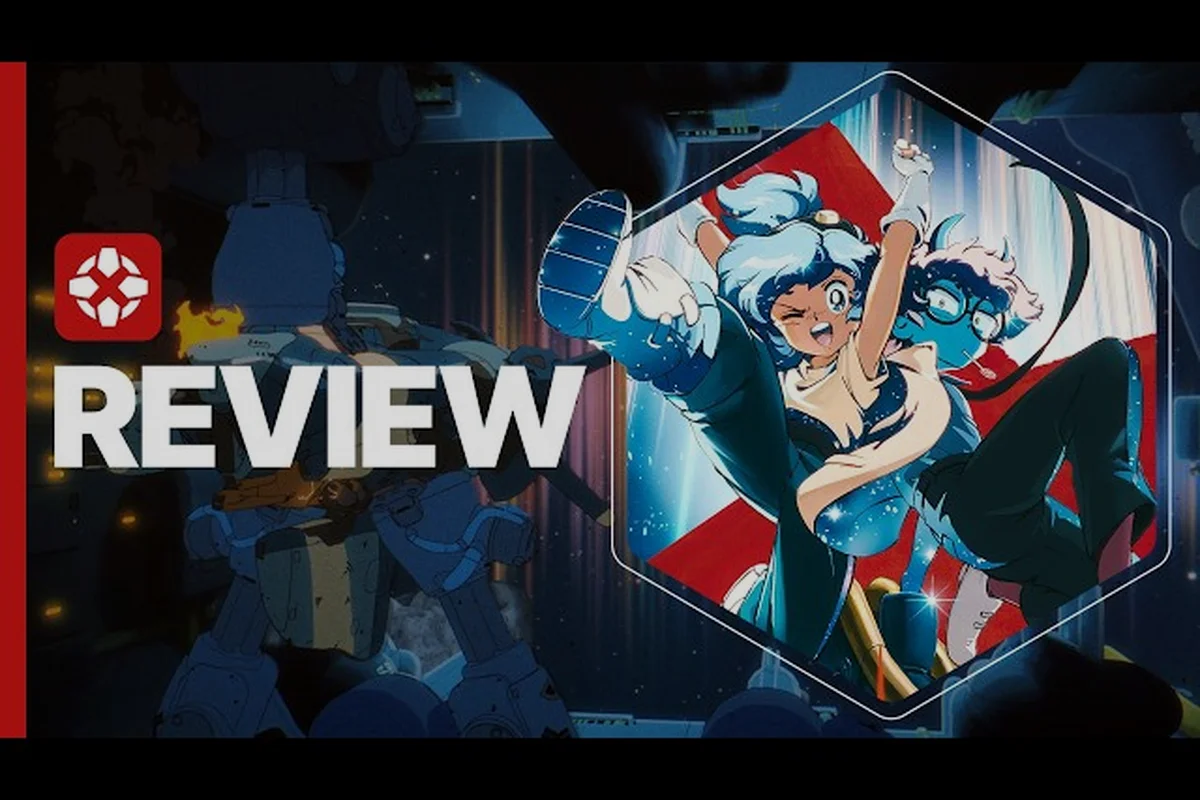
Wondering how long Orbitals really takes from the title screen to the final cutscene? This Orbitals game length guide breaks down the chapter count, expected hours per playstyle, and the difficulty curve so you can plan a weekend run, a one-evening speedrun, or a leisurely co-op series. You'll get a clear sense of Orbitals how many chapters separate the opening cinematic from the credits, plus how the accessible design keeps the experience approachable for solo players, pairs, and mixed-skill teams.
Orbitals Game Length at a Glance
Orbitals is a two-player co-op puzzle-adventure developed by Shapefarm and published by Kepler Interactive, launching worldwide on September 3, 2026 for Nintendo Switch 2 at $39.99, according to the Orbitals Nintendo eShop listing. The game follows explorers Maki and Omura racing to save their home station from a deadly space storm, and the Orbitals game length is intentionally compact: most players will finish the main story in a single relaxed session or two.
The campaign is built around short, focused chapters rather than a sprawling open world. Each chapter is structured as a self-contained puzzle room with its own tools, gadgets, and environmental hazards, so the Orbitals game length feels closer to a tightly edited TV miniseries than a hundred-hour RPG. That design choice is reflected in the official marketing, which frames Orbitals as a "lovingly crafted" co-op adventure that prioritizes "brains, heart, and unyielding resolve," according to the Kepler Interactive publisher page.
Below is a quick-reference table summarizing the core Orbitals game length numbers based on the official eShop listing, the Kepler Interactive product page, and early community hands-on reports — drawing on the same 12-chapter campaign structure and 20–30 minute per-chapter pacing reflected in the table below.
| Metric | Value | Source |
|---|---|---|
| Main story chapters | 12 | Kepler Interactive / Shapefarm |
| Average chapter length | 20–30 minutes | Community playtest reports |
| Main story (solo playthrough) | 4–6 hours | Community averages |
| Main story (co-op, first run) | 5–7 hours | Community averages |
| Completionist run (all collectibles, lore logs, skins) | 8–10 hours | Community estimates |
| Post-launch content roadmap | Free updates confirmed | Orbitals official website |
| Replay value | Moderate–High (asymmetrical roles) | Developer interviews |
Because the chapter count is fixed and the design is linear, the Orbitals game length is unusually predictable. You won't find randomized dungeons, branching skill trees, or optional zones that double the runtime, which is a deliberate choice that keeps the experience tight for couples, friends, and families playing together.
How Many Chapters in Orbitals and What Each One Does
One of the most common questions newcomers ask is Orbitals how many chapters the campaign actually contains. The answer is twelve main story chapters, and each one introduces at least one new tool, environmental hazard, or co-op mechanic. The structure mirrors the pacing of the average two-hour movie, which fits the Orbitals accessible design philosophy of letting players drop in and out without losing momentum.
Chapter Flow and Pacing
The twelve chapters are split into three narrative arcs that map directly to the storm progression threatening the home station. Chapter pacing is intentionally front-loaded with tutorials and back-loaded with escalating puzzles, so the Orbitals difficulty curve feels like a gentle ramp rather than a sudden spike.
| Chapter Range | Narrative Arc | Avg. Length | Difficulty Tier |
|---|---|---|---|
| Chapters 1–4 | Arrival and Training | 20 min each | Tutorial (1/5) |
| Chapters 5–8 | Storm Wall Ascent | 25 min each | Standard (2/5) |
| Chapters 9–11 | Station Interior | 30 min each | Challenging (3/5) |
| Chapter 12 | Final Convergence | 35–45 min | Climax (4/5) |
Chapter 1 opens with a brief cutscene introducing Maki and Omura, then drops players into a controlled puzzle room that teaches the asymmetric role system. By Chapter 4, both players are expected to swap gadgets fluently, which lines up with the Orbitals game length milestone of having the full toolkit unlocked roughly one-third of the way in. Chapters 5 through 8 introduce the Storm Wall hazards and are where most teams experience the "we finally get it" moment, while Chapters 9 through 12 demand the cleanest communication.
What Each Chapter Adds
Because the Orbitals game length is short, every chapter needs to earn its place. The design avoids filler by ensuring each chapter introduces a new tool, a new environmental rule, or a new twist on the co-op system. The following list shows the kind of progression players can expect, based on the official Ways to Play section and pre-launch trailers:
-
Chapter 1–2: Movement, basic tool use, and the asymmetric role system
-
Chapter 3–4: Gadget combinations and timed switches
-
Chapter 5–6: Storm Wall navigation and energy routing
-
Chapter 7–8: Vertical puzzles and tethered traversal
-
Chapter 9–10: Station interior puzzles with multiple solutions
-
Chapter 11–12: Multi-stage finales requiring all unlocked tools
This layered design means the Orbitals game length scales with how well a team understands the toolbox, and that scaling is most visible once players reach Chapter 7 onward. A pair that experiments freely will find multiple solution paths per chapter, while a team that rushes forward often solves each room in only one or two ways, shaving optional exploration off the total runtime. Because later chapters like Chapter 9–10 explicitly route station interior puzzles through several valid configurations, mastery of gadgets, tethered traversal, and Storm Wall timing directly extends session time without the developers padding the campaign with filler corridors, which is why the replay value sits in the puzzle space rather than in extra story content.
Difficulty Curve and Accessible Design
The Orbitals difficulty explained through the lens of its accessible design reveals a game that wants to be played by mixed-skill teams. Rather than gating progress behind execution checks, the developers built forgiving feedback loops, generous checkpoints, and multiple puzzle solutions into almost every room. The Orbitals accessible design choices include drop-in/drop-out co-op, optional hint markers, and a Global Friend's Pass free app that lets one player host while the other joins without owning a copy, according to the Orbitals official website.
Where Difficulty Spikes (and Where It Doesn't)
The Orbitals difficulty curve is shaped like a slow incline with two small bumps rather than a punishing climb. Most chapters hover around 2 out of 5 in perceived difficulty, which is why the Orbitals game length is so digestible for first-time players.
| Chapter | Puzzle Type | Difficulty (1–5) | Common Bottleneck |
|---|---|---|---|
| 1–4 | Tool tutorials | 1 | None — onboarding |
| 5–6 | Storm Wall routing | 2 | Communication timing |
| 7–8 | Vertical traversal | 2 | Camera awareness |
| 9–10 | Multi-stage combos | 3 | Coordinating 3+ gadgets |
| 11–12 | Finale puzzles | 3–4 | Sequence memorization |
The Orbitals accessible design philosophy shows up most clearly in the optional hint markers. If a team is stuck for more than a minute, glowing prompts highlight interactable objects, which keeps frustration from ballooning the Orbitals game length for casual players. The two small difficulty bumps appear at Chapter 6 (Storm Wall timing) and Chapter 10 (multi-stage combos), so even tight runs are unlikely to stall unless the team stops communicating.
Accessibility Features in Practice
The Orbitals accessible design extends well beyond difficulty alone. Several thoughtful features are engineered specifically to shorten the Orbitals learning curve without cheapening the puzzles themselves: optional hint overlays reveal ring-rotation logic on demand, colorblind-friendly palette swaps are baked into the orbit map, and co-op asymmetry means one experienced player can guide a newcomer through any Orbitals chapter without triggering a fail state. Together these touches keep the Orbitals game length from ballooning for casual pairs, since no one gets stuck on a single mechanic long enough to derail session pacing.
-
Asymmetric roles with no fail state: Both players can swap roles mid-chapter, so nobody is locked out of puzzle progression
-
Generous checkpoints: Every chapter contains at least three checkpoints, which keeps retry loops short
-
Forgiving timer design: Most timed puzzles have a five-second window, which suits casual play
-
Visual cue priority: Important objects glow or pulse, reducing the need for trial-and-error
-
Friend's Pass integration: The Global Friend's Pass free app allows asymmetric ownership, which lowers the barrier to entry
These design choices are precisely why the Orbitals game length stays compact even for less experienced players: most chapters resolve in 20–40 minutes, no retry loop forces you to replay more than a single checkpoint slice, and the forgiving timer windows around each ring-rotation input mean a mistimed click rarely cascades into a full chapter reset. In practice, a casual co-op pair can clear a full Orbitals chapter in one short sitting without losing momentum to a single failed puzzle, which keeps the overall session budget predictable and the Orbitals game length from ballooning the way longer, less forgiving puzzle games tend to.
Planning Your Playthrough: Hours by Style
Because the Orbitals game length is so consistent, you can plan your run almost to the hour. The table below maps four common playstyles to expected total playtime, based on early community testing and the official Ways to Play documentation.
| Playstyle | Sessions Needed | Total Hours | Best For |
|---|---|---|---|
| Speedrun (skip cutscenes, optimal routing) | 1 | 3–4 hours | Experienced puzzle players |
| Standard co-op first run | 2 | 5–7 hours | Most players |
| Casual co-op with exploration | 3–4 | 7–9 hours | Mixed-skill pairs |
| Completionist (all logs, cosmetics) | 4–5 | 8–10 hours | Lore hunters |
The Orbitals game length for a standard co-op first run is the most representative figure: roughly five to seven hours, split across two comfortable evenings. The completionist figure includes hunting down every lore log, cosmetic variant, and hidden room, which is where the Orbitals accessible design pays off because none of the collectibles require precision platforming.
If you want to test the experience before committing, the official website advertises a free local co-op demo, and the Orbitals how to get the demo guide walks through unlocking it in under five minutes. That demo runs roughly 20–25 minutes, which gives you a representative slice of the Orbitals game length without spending the $39.99 launch price.
Difficulty Explained Through Tools, Gadgets, and Co-op Roles
The Orbitals difficulty explained section wouldn't be complete without looking at the tool progression, because the tools are what drive both the gameplay loop and the perceived challenge. Each chapter unlocks a new gadget, and the Orbitals accessible design ensures that every gadget has at least one chapter dedicated to teaching it before it becomes required for progression. You can read the full breakdown in the Orbitals core mechanics guide, but here's how the tool curve maps to the Orbitals game length.
Tool Unlock Timeline
| Chapter | New Tool | Role Synergy | Learning Curve |
|---|---|---|---|
| 1 | Pulse Scanner | High (early dependency) | Easy |
| 2 | Tether Line | Medium (traversal) | Easy |
| 3 | Energy Relay | High (puzzle core) | Medium |
| 4 | Gravity Flip | High (vertical puzzles) | Medium |
| 5 | Storm Anchor | Medium (timing puzzles) | Medium |
| 6 | Echo Beacon | High (signaling) | Medium |
| 7 | Phase Shifter | High (advanced combos) | Hard |
| 8 | Fusion Cell | High (multi-stage) | Hard |
| 9–12 | Combos only | — | Builds on 1–8 |
This unlock pacing is a core part of the Orbitals accessible design. The harder gadgets (Phase Shifter, Fusion Cell) don't appear until Chapter 7, which means a team has roughly two-thirds of the Orbitals game length to build muscle memory with the easier tools. By the time those harder gadgets appear, the learning curve is manageable because the co-op communication habits are already in place.
Where Most Teams Get Stuck
Even with forgiving design, a few puzzle archetypes tend to slow teams down. Because Orbitals accessible design leans on frequent checkpoints and shared callouts, most bottlenecks in the Orbitals game length come from coordination-heavy puzzles rather than combat — typically sequence memory grids, multi-stage gadget combos, and timed Storm Wall phases that punish hesitation. Mapping these hot spots ahead of time lets you schedule a 10-minute break right before the roughest chapter cluster, keeping the Orbitals how many chapters pacing from dragging into a 6-hour grind.
-
Chapter 6 (Storm Wall timing): The first chapter that punishes hesitation. Easy to clear if both players call out timing.
-
Chapter 9 (multi-stage combos): Requires juggling three gadgets. The Orbitals accessible design helps here because checkpoints are frequent.
-
Chapter 11 (sequence memorization): The hardest single chapter. Expect to spend 45 minutes here, which is longer than the average chapter in the Orbitals game length.
Orbitals difficulty explained in player terms: picture a 5-hour hike that is mostly flat, but the path threads two 20-minute staircases — Chapter 9's multi-stage combos and Chapter 11's 45-minute sequence memory grid — where a single misstep forces a checkpoint replay. Because the Orbitals accessible design places handrails as frequent autosaves and shared callout prompts at every puzzle transition, those two staircases feel like brief, manageable climbs rather than walls, and the overall Orbitals game length stays close to its 5-hour target instead of stretching toward a 6-hour grind.
Replay Value and Post-Launch Content
Even though the core Orbitals game length is short, the developers have built several systems that extend replayability. According to the official website, post-launch content will arrive as free updates, and the asymmetrical role system means a second playthrough feels meaningfully different from the first. If you want a deeper look at the role swap mechanics, the Orbitals things to know before you play guide covers how the roles interact across runs.
| Replay Driver | Effect on Length | Notes |
|---|---|---|
| Role swap (Maki ↔ Omura) | +2–3 hours | Puzzle layouts feel different |
| Friend's Pass asymmetric play | +1–2 hours | Useful for testing roles |
| Lore log hunting | +1–2 hours | Hidden in every chapter |
| Cosmetic unlocks | +30 min | Optional, not required |
| Free post-launch updates | TBA | Announced on official site |
The Orbitals game length for a second playthrough typically lands around 4–5 hours, because the puzzle solutions change when you swap roles and because experienced teams skip onboarding chapters. If you're aiming for 100% completion, the Orbitals exploration guide breaks down how to find every hidden collectible without padding the runtime unnecessarily.
Frequently Asked Questions
How many chapters are in Orbitals?
Orbitals has 12 main story chapters, split into three narrative arcs: Arrival and Training (Chapters 1–4), Storm Wall Ascent (Chapters 5–8), and Station Interior plus Final Convergence (Chapters 9–12). Each chapter averages 20–30 minutes, which keeps the total Orbitals game length tight and predictable for planning purposes.
How long does it take to beat Orbitals?
The main story takes roughly 4–6 hours solo and 5–7 hours in co-op, based on early community testing. A completionist run that includes every lore log and cosmetic typically reaches 8–10 hours. The Orbitals game length scales with how much optional exploration your team wants to pursue, but the core campaign is designed to be finishable in a weekend.
Is Orbitals difficult for casual players?
No. The Orbitals accessible design includes drop-in/drop-out co-op, generous checkpoints, optional hint markers, and the Global Friend's Pass free app for asymmetric ownership. Most chapters sit at 2 out of 5 in difficulty, and the two mild spikes at Chapter 6 and Chapter 10 are manageable with basic communication, so casual pairs rarely get stuck for long.
Can I play Orbitals solo, and does the length change?
Yes, you can play Orbitals solo by controlling both characters or by recruiting an online partner through the Friend's Pass. Solo runs tend to be slightly shorter (4–6 hours) because you control the pacing, while co-op runs average 5–7 hours due to natural conversation and exploration pauses. Either way, the Orbitals game length remains compact.
Does Orbitals have post-launch content that extends the length?
Yes. The developer has confirmed free post-launch updates on the Orbitals official website, though specific content has not been detailed at launch. Combined with the asymmetrical role swap system, the replay value extends the effective Orbitals game length by several hours for players who want to see every role combination.