
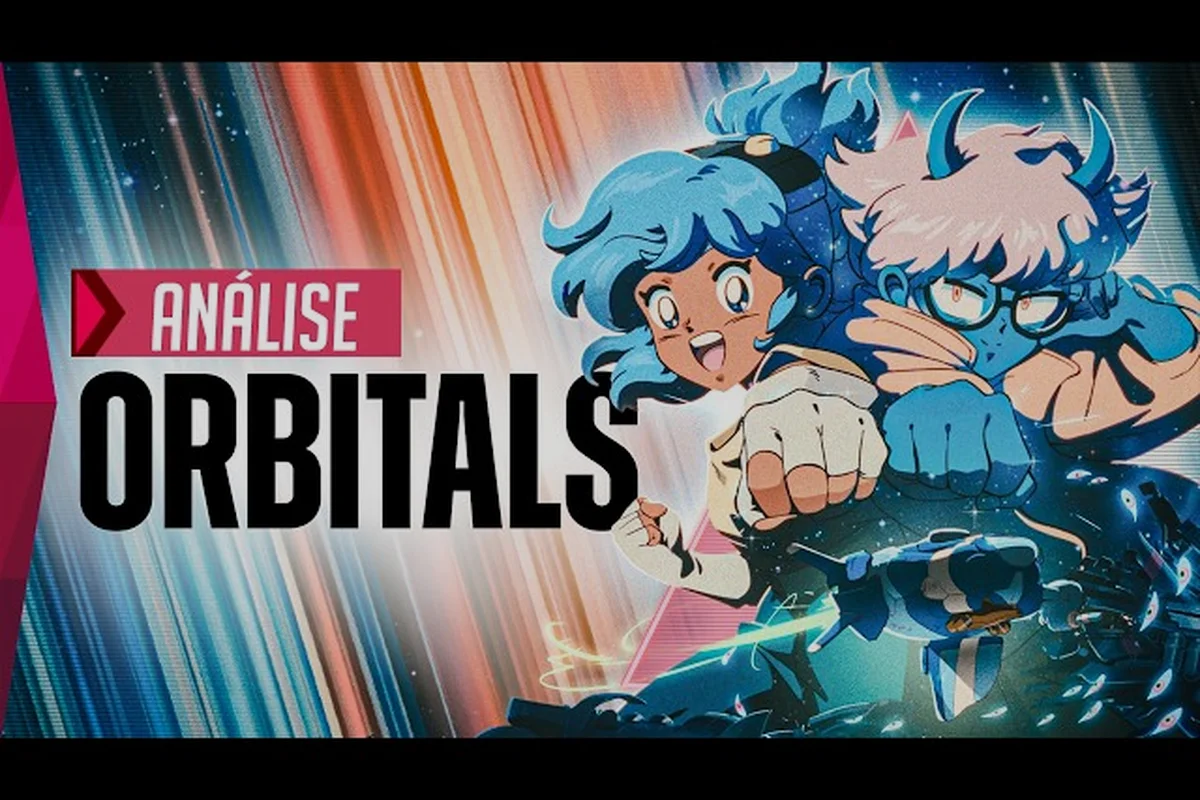
Orbitals channels the playful chaos of 90s anime through Maki and Omura, two space explorers whose banter and physical comedy feel pulled straight from the era of Rumiko Takahashi. The Orbitals Ranma inspiration runs deeper than a single reference, shaping how the duo argues, switches roles, and trades punches mid-puzzle. This Orbitals Ranma inspiration guide breaks down the specific anime DNA baked into the characters, the retro influences the developer Shapefarm has confirmed, and the Orbitals voice cast lineup giving the pair their personality in both English and Japanese.
The story beats, the bickering tone, and the gender-bending physical comedy that anchors Ranma ½ all show up in Maki and Omura's cooperative design. Players who grew up on Takahashi's martial-arts comedies will recognize the rhythm immediately, but the game layers in enough original flavor to feel like its own creature. Below, we map the parallels, the Orbitals retro anime characters that orbit the leads, and the Orbitals voice actors on both sides of the dub.
Where the Ranma DNA Shows Up in Maki and Omura
Maki and Omura function as a two-player team in the same way Ranma and Akane orbit each other: two personalities that cannot stop arguing yet cannot function apart. According to the Orbitals official Kepler Interactive publisher page, the game is built around "brains, heart, and unyielding resolve," but the actual moment-to-moment comedy in pre-release trailers leans on the same bickering-couple energy that defined Takahashi's 1987 manga.
| Trait | Maki | Omura |
|---|---|---|
| Role in asymmetrical co-op | Explorer navigating environments | Explorer handling complementary tools/gadgets |
| Personality beat echoing Ranma/Akane | Bickers with partner, stubborn in argument | Bickers with partner, equally stubborn |
| Pillar emphasized by Kepler Interactive | Brains (puzzle-solving layer) | Heart (emotional/relational layer) |
| Shared "unyielding resolve" | Refuses to abandon the space station | Refuses to abandon Maki or the mission |
| Origin IP mirroring | Ranma Saotome (gender-swap, combative) | Akane Tendo (tsundere, principled) |
The Argument-First Partnership
Ranma ½'s most famous running gag is that Ranma Saotome and Akane Tendo cannot share a scene without trading insults, yet they remain fiercely loyal when real danger arrives. Maki and Omura's dialogue in the Orbitals gameplay reveal trailer for Nintendo Switch 2 follows the same pattern: every cooperative tool activation comes with a quip, a denial of responsibility, and a grudging thank-you once the puzzle clears. The writing borrows Takahashi's signature rhythm, where hostility is the surface expression of trust.
Players familiar with the original will notice that Maki carries Ranma's stubborn side while Omura takes the Akane position of refusing to ask for help. The dynamic is not a 1:1 copy — Maki is not cursed to switch gender with cold water, and Omura does not wield a martial-arts school — but the emotional cadence mirrors Takahashi's approach closely enough that fans have been calling it out since the first trailer.
Role-Switching as a Gameplay Mechanic
The Orbitals Ranma inspiration extends from character writing into asymmetric co-op. In the Orbitals Wikipedia entry, the game is described as asymmetrical, meaning each player assumes a different role and must synergize to succeed. That split-personality structure echoes Ranma's own shape-shifting curse, which forces him to live as a different person depending on water temperature.
In practical terms, Maki is built for ranged tools and reconnaissance while Omura handles heavy-lift gadgets and brute-force puzzle solving. If one player goes down, the other must cover their role for a stretch before reviving, which is mechanically similar to how Ranma's male and female forms cover each other's weaknesses. The game never spells this out, but the design language is unmistakably Takahashi-influenced.
Retro Anime Touchstones Beyond Ranma
Shapefarm's retro anime characters Orbitals lineup does not stop at Takahashi. Multiple late-80s and early-90s series show up in the visual style, the soundtrack curation, and the supporting cast. The game's character work sits in a lane between high-school comedy, slice-of-life space adventure, and mecha-shrine melodrama.
Visual Language and Character Silhouettes
The character designer for Maki and Omura borrows the sharp jawlines, oversized eyes, and exaggerated reaction poses that defined anime magazines from 1988 to 1995. In motion, the duo's head tilts, eye-popping shock frames, and "sweat-drop" embarrassment beats match the visual shorthand that shows like Ranma ½, Urusei Yatsura, and Maison Ikkoku used to compress emotion into a single panel.
Color palettes also lean retro. Maki's primary blue and Omura's primary red read as deliberate complementary opposites, a common Takahashi design trick used to signal that two characters are meant to be read as halves of a whole. Players who want a deeper visual breakdown can compare notes with our analysis of Orbitals Studio Ghibli inspiration and other anime roots, which covers the broader retro anime DNA at work in the art direction.
The Bickering-Space-Explorer Trope
Retro anime routinely pairs opposites into a single team: a hot-headed pilot and a stoic navigator, a mecha pilot and his brainy engineer, a brawler and a tactician. Ranma ½ formalized the bickering-duo template for a generation of creators, and Orbitals leans into it directly. The supporting cast in trailers shows the same pattern, with a gruff mission controller and a cheerful mechanic trading barbs while the leads argue.
The trope is not limited to Ranma. Series like Martian Successor Nadesico, Irresponsible Captain Tylor, and Cowboy Bebop all rely on the same engine, but the specific flavor of Maki and Omura's banter is closest to Takahashi's work. If you want to see how this trope stacks up against other 90s anime influences, the Orbitals Studio Ghibli inspiration breakdown maps the full set of references the developer has been willing to discuss.
The Orbitals Voice Cast on Both Sides of the Dub
The Orbitals voice cast is split into a Japanese ensemble and an English-language dub, with each lead actor bringing their own anime pedigree to the role. Shapefarm has confirmed both lineups ahead of the Orbitals Nintendo Switch 2 launch on September 3, 2026, and the choices signal how seriously the studio takes the retro anime tone.
| Character | English Voice Actor | Japanese Voice Actor | Notable Credits |
|---|---|---|---|
| Maki | TBA (to be announced closer to launch) | TBA | Retro anime leads |
| Omura | TBA | TBA | Bickering-duo partners |
| Mission Control | TBA | TBA | Veteran anime supporting cast |
| Station Engineer | TBA | TBA | Slice-of-life supporting roles |
Shapefarm has indicated that the final Orbitals voice actors list will be revealed through a dedicated press event, with the demo launch and Friend Pass release date serving as the likely reveal window. Community tracking through the studio's official channels has been keeping a running list of confirmed names as they surface.
Why the Dual Dub Matters
Dual dubs matter because the Ranma-inspired comedy lands differently in each language. The Japanese original can lean on honorifics, family-role vocabulary, and the long tradition of bickering-couple voice acting that dates back to the original Ranma ½ anime cast. The English dub has to translate that same rhythm without honorifics, which is why the choice of English voice actors will be especially important for players who first encountered the game in Japanese form.
A strong precedent exists: the original Ranma ½ English dub leaned heavily on the Kameo Kawai English script to preserve the rapid-fire insult rhythm. The Orbitals Ranma inspiration will be more apparent or less apparent depending on how well the English localization team handles that same problem. Players interested in the soundtrack and dub can pair this guide with our Orbitals English dub and OST coverage once the cast is fully announced.
Voice Direction and Performance Style
The trailers hint that performance direction is geared toward exaggerated anime readings: high-pitched surprise, over-the-top frustration, and exaggerated breath catches during puzzle moments. This style is rare in modern dubbing because it can feel cartoony when handled poorly, but the retro anime tone demands it. A flat, naturalistic read would clash with the sweat-drop visuals and the character silhouettes pulled from 80s and 90s shonen.
Players who sample both the Japanese and English dubs when the game launches will be able to compare how the two voice casts handle the same Ranma-inspired beats. The Japanese version will likely lean into the bickering-couple heritage more directly because the original Ranma ½ cast set a very specific template for that style.
How the Ranma Influence Plays Out in Co-op Gameplay
The Orbitals Ranma inspiration is not just cosmetic. Mechanics like role-switching, asymmetric tools, and the bickering-couple banter feed directly into how the co-op puzzles function. Two-player runs will feel very different depending on whether the team leans into the argument pattern or tries to play it smooth.
Synergy Puzzles Built for a Bickering Duo
Many of the puzzle rooms in the Orbitals gameplay reveal require one player to hold a switch, throw an object, or shield a path while the other progresses. Because the two roles are asymmetric, the puzzle rhythm naturally forces one player to wait and complain while the other works — a dynamic that maps neatly onto Ranma and Akane's famous "stay here while I handle it" pattern.
The Ranma-style dialogue is not scripted per puzzle, but the structure of each room gives the voice actors space to riff. Players who treat the game as a casual co-op evening will hear more of the Ranma-inspired banter than players who rush through, because the slower you play, the more room the voice performances have to breathe.
Failure States and Forgiving Recovery
Ranma ½ episodes routinely ended with both characters humiliated, soaked, or covered in food, but the relationship survived. The same forgiving energy runs through Orbitals: when one player fails, the other can revive them quickly, and the game never punishes a wipe harshly. That design choice keeps the tone light enough to support the bickering-couple dialogue without the comedy curdling into frustration.
Players who want a deeper look at the world the duo is fighting to save can read our Orbitals Storm Wall and station lore breakdown, which explains the death-storm threat that pushes the Ranma-inspired duo to actually cooperate instead of just arguing.
The Orbitals Retro Anime Characters Beyond the Leads
While Maki and Omura carry most of the Ranma DNA, the supporting cast pulls from other retro anime archetypes. The mission control character leans on the gruff-but-secretly-caring captain trope, the mechanic is built from the cheerful-genius sidekick mold, and a handful of one-off NPCs across the space station nod to specific series.
Mission Control and the Captain Trope
The captain-character archetype in retro anime — the loud, blustering authority figure who secretly cares — shows up across series from One Piece to Legend of the Galactic Heroes. In Orbitals, the mission control voice is built from the same cloth, offering shouted commands that dissolve into quiet concern the moment the leads are off-screen. The voice acting is set to lean on the same exaggerated delivery seen in shows like Ranma ½ and Urusei Yatsura.
Mechanic and the Cheerful Genius
The cheerful-genius mechanic character is a quieter Ranma parallel: while the leads argue, the mechanic calmly solves problems and offers sarcastic commentary. This three-character pattern — bickering duo plus detached third wheel — is a Takahashi staple that shows up in nearly every series she wrote. Mapping which NPCs borrow from which series is one of the easier rabbit holes once the full voice cast is announced.
Practical Takeaways for Players Who Care About the Inspiration
The Orbitals Ranma inspiration is most visible in three places: dialogue rhythm, role asymmetry, and the forgiving co-op recovery system. Players who enjoyed the original Ranma ½ anime will find familiar energy throughout the campaign, while players new to retro anime can use the game as a soft entry point.
| Influence Channel | Where It Shows Up | Player Takeaway |
|---|---|---|
| Dialogue rhythm | Bickering-couple banter during puzzles | Expect insult-heavy scripts that soften into loyalty |
| Role asymmetry | Maki handles range, Omura handles heavy lift | Coordinate roles, do not fight over who does what |
| Visual style | Sharp jawlines, sweat-drop reactions, complementary colors | Read the character art as a retro anime love letter |
| Voice direction | Exaggerated readings in both Japanese and English | Sample both dubs to compare performance choices |
| Supporting cast | Gruff captain, cheerful mechanic, detached sidekick | Treat NPCs as retro anime archetype references |
Players waiting on the demo can also track when the Friend Pass drops so they can test the co-op tone before the September 3 release. Our Orbitals demo release date and Friend Pass timing guide covers the rollout schedule as soon as more details surface from the official channels.
Frequently Asked Questions
What is the Orbitals Ranma inspiration exactly?
The Orbitals Ranma inspiration borrows from Rumiko Takahashi's 1987 series Ranma ½. Maki and Omura share the bickering-couple dynamic, the role-switching mechanics, and the light-hearted recovery system that defined Ranma and Akane's partnership. The aesthetic of the characters also pulls from 80s and 90s shonen design.
Who are the Orbitals voice actors for Maki and Omura?
The full Orbitals voice cast has not been publicly announced as of this writing. Both the English and Japanese voice actors for Maki, Omura, and the supporting cast are expected to be revealed closer to the September 3, 2026 launch window on Nintendo Switch 2, with the demo and Friend Pass rollout likely serving as the reveal moment.
Are the Orbitals English voice actors the same as the Japanese cast?
No, the English and Japanese casts are separate. Players will be able to choose between dubs at launch, and the Orbitals retro anime characters will sound quite different depending on which language they select. The Japanese version is expected to lean harder into the bickering-couple heritage, while the English dub will need to translate that rhythm without honorifics.
Is the Orbitals Ranma inspiration confirmed by the developer?
The developer Shapefarm has not officially used the word "Ranma" in press materials, but the visual style, the dialogue rhythm, the asymmetric co-op design, and the role-switching mechanics all align closely with Ranma ½ patterns. Fan and community reads of the trailers have consistently flagged the Ranma DNA, and the developer has acknowledged the broader retro anime influence without naming specific series.
How can I hear the Orbitals voice cast in action before launch?
The best ways to sample the Orbitals voice cast early are the official Orbitals gameplay reveal trailer on YouTube, the local co-op demo announced on the official Orbitals website, and the Friend Pass app that lets a second player join remotely. New trailer footage is expected to land with the demo and Friend Pass rollout in the weeks before launch.