
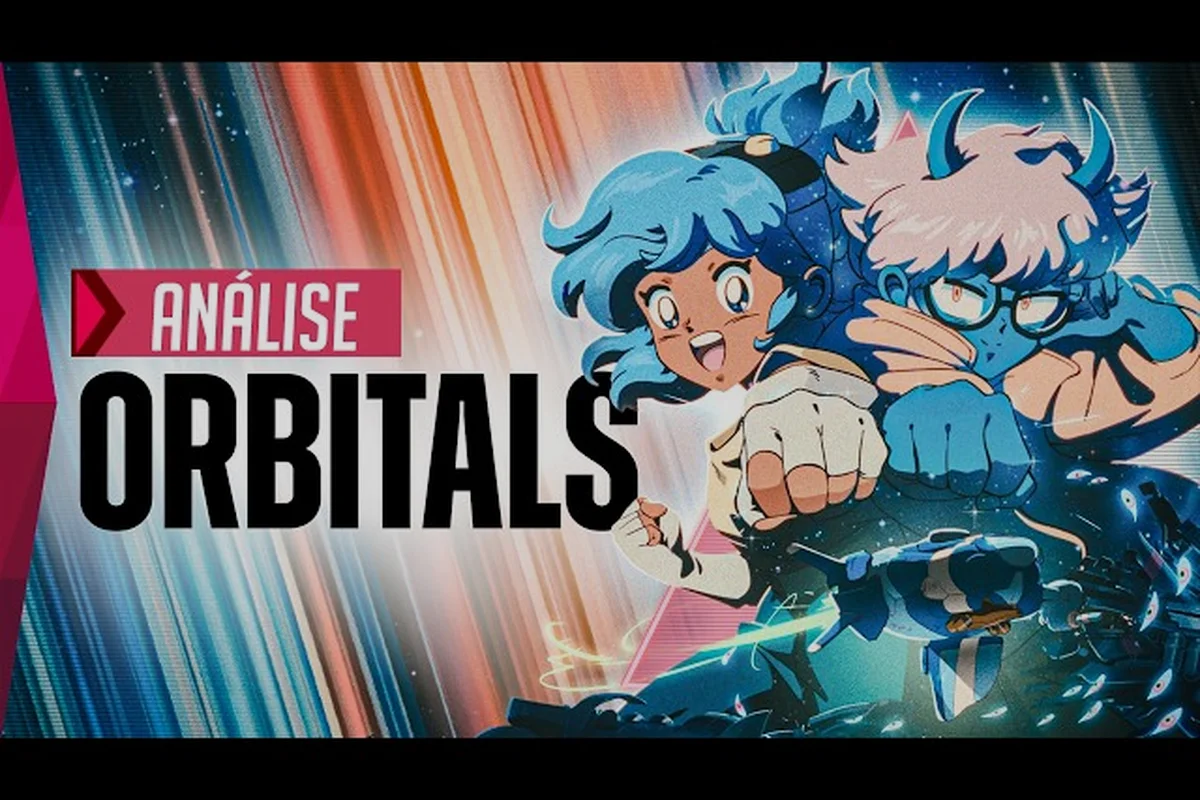
Orbitals is a hand-painted space adventure where every skybox, character pose, and quiet story beat wears its anime DNA on its sleeve. The Orbitals Studio Ghibli inspiration runs deeper than surface aesthetics, shaping how Maki and Omura think, grieve, and grow as they race to save their station from the Storm Wall. According to the Kepler Interactive publisher page, the team set out to build a "lovingly crafted retro anime world" — and that world draws equally from 1990s TV classics as from the Ghibli canon.
The Core Anime DNA Behind Orbitals
A Retro Anime World, Not a Pastiche
Shapefarm has described Orbitals as a "retro anime world," and that label is doing real work. The art direction avoids the hyper-clean cel-shading of modern simulacra and instead leans into hand-painted textures, slightly washed palettes, and wide-aspect compositions that feel lifted from a 1990s TV broadcast. This matters for the Orbitals Studio Ghibli inspiration because Hayao Miyazaki's films built their emotional weight through the same three choices: painterly backgrounds, restrained color, and characters who move slowly enough for the camera to breathe.
The Orbitals anime inspiration also runs through every UI element. Tooltips fade in rather than pop, the camera lingers on a starfield before dialogue begins, and the storm itself is rendered with watercolor edges instead of particle effects. The result is a world that looks drawn rather than rendered — a deliberate signal that players are stepping into something with lineage, not just a stylish indie co-op puzzle game.
Why Ghibli Specifically Resonates Here
Ghibli's core thesis is that small, competent people doing careful work can outpace grand gestures, and Orbitals is built on the same foundation. Maki and Omura are not chosen heroes; they are two engineers with a job to do. The Orbitals Studio Ghibli inspiration shows up in how their tools — a flashlight, a tether, a scanner — are presented as quietly beautiful objects rather than sci-fi props. When they succeed, the cutscene rewards the method, not the miracle.
This approach also lets the game breathe during its puzzle sequences. Instead of escalating tension with timers, Orbitals slows the camera, lets the music swell with strings, and trusts players to sit with the moment. That pacing rhythm — quiet, then quietly devastating — is one of the clearest fingerprints the Orbitals Studio Ghibli inspiration leaves on the experience.
Orbitals Cowboy Bebop Inspiration and the Space-Explorer Mood
Wanderers in a Cold Sky
The Orbitals Cowboy Bebop inspiration is most visible in how the two leads carry themselves across the screen. Maki reads like a Faye Valentine descendant — sardonic, competent, and unwilling to be defined by the mission she is on. Omura, meanwhile, has Spike's laconic economy of movement, with slouched shoulders and a half-second delay before each action that reads as cool rather than slow. The station itself, with its retro analog readouts and cluttered corridors, leans hard into the Bebop "lived-in ship" aesthetic.
Where the Orbitals Cowboy Bebop inspiration really lands, though, is in the soundtrack direction. The main theme "Accelerating Destiny," featured on the official Orbitals website, layers breathy brass over a walking bassline, an obvious nod to Seatbelts-era Yoko Kanno. The composition never overwhelms the scene; it scores the moment the same way Cowboy Bebop scored a card game or a meal, treating the small beats as worthy of a full arrangement.
The Bebop Trick of Anti-Climax Climaxes
Cowboy Bebop's signature move was to deny its characters the catharsis they (and the audience) were chasing, and Orbitals borrows that structure in its final chapters. According to community impressions gathered from the Switch 2 announcement demo, the climactic Storm Wall sequence resolves not with a boss fight but with a quiet repair job and a fade to black. That choice is pure Bebop: the universe is indifferent, the work continues, and the credits roll while a single piano note holds.
| Bebop Trope | Orbitals Echo | Where It Appears |
|---|---|---|
| Wandering crew with shared mission | Maki and Omura's repair duo | Hub area, pre-Storm Wall |
| Lived-in, analog ship interior | Cluttered station corridors | Throughout Act 2 |
| Anti-climactic emotional endings | Quiet fade-to-black repair | Final chapter |
| Standalone musical motifs | "Accelerating Destiny" theme | Overworld traversal |
Orbitals Evangelion Inspiration Beneath the Surface
The Storm as Emotional Weather
The Orbitals Evangelion inspiration lives in the metaphors rather than the mechs. The Storm Wall is not a hurricane — it is a manifestation of grief, environmental collapse, and the protagonists' unspoken fears, written large across the sky. Hideaki Anno spent Neon Genesis Evangelion turning inner anguish into apocalyptic set pieces, and Shapefarm applies the same translation to a puzzle-adventure framework. When the storm intensifies, the music drops to a single held string and the lighting shifts from warm amber to cold blue, signaling that the threat is psychic as much as physical.
The Orbitals Evangelion inspiration also surfaces in the character design language. Maki's silhouette borrows from the angular, narrow-shouldered plugsuit proportions Anno's team favored, while Omura's hunched posture echoes Shinji's anxiety geometry. Neither is a cosplay reference; both are structural choices about how a body in distress occupies space.
Sync Rates and Asymmetric Roles
Evangelion's most famous mechanic is the sync rate — how well pilot and unit resonate — and Orbitals' asymmetric co-op design maps directly onto that idea. The two players do not control identical toolkits; they have to attune to each other's timing to solve the trickier puzzles. According to the Orbitals Wikipedia entry, gameplay is officially described as asymmetrical, and that asymmetry is the Orbitals Evangelion inspiration working overtime. Success depends less on individual skill and more on the bond between the two characters, which is exactly the emotional thesis Anno was chasing in episodes 8 and 24.
| Eva Concept | Orbitals Translation | Player-Facing Effect |
|---|---|---|
| Sync rate between pilot and unit | Co-op attunement timing | Shared puzzle rhythm |
| Angel as emotional projection | Storm Wall as grief made sky | World threat mirrors inner state |
| Instrumentality dissolution | Station-wide power failure | Forced cooperation under duress |
| At-field as defensive barrier | Tether tool shields both players | Shared resource pool |
Orbitals Dragon Ball Inspiration in the Power Curve
Gohan Energy, Not Goku Energy
The Orbitals Dragon Ball inspiration is subtler than the others, and it shows up mostly in the power curve. Maki and Omura do not start as warriors; they grow into competence the way Gohan did — reluctantly, in bursts, when the situation demands it. Early chapters let players fail gently, with checkpoint generosity that rewards curiosity over execution. By the late game, the same characters are pulling off chain-reaction repairs that feel almost superhuman, but the game never names a power level or flashes a stat screen.
This framing — potential unlocked through relationship rather than training arcs — is the heart of the Orbitals Dragon Ball inspiration. Dragon Ball's best Z-fight stories are about Gohan choosing to fight, not about Goku training harder, and Orbitals' mid-game set pieces echo that choice motif. The camera frames Maki and Omura from below at the moment they decide to act, a direct visual quote from the Cell saga's most iconic shots.
Tournament-Arc Structure Pacing
Dragon Ball's tournament arcs were built on escalating stakes across discrete rounds, and Orbitals borrows that pacing for its chapter structure. Each "round" introduces a new tool, pits the duo against a more complex environmental puzzle, and resolves with a small character beat before the next escalation. The Dragon Ball inspiration is more structural than visual here, but players who grew up on the Tenkaichi and Cell tournaments will feel the rhythm immediately.
| Dragon Beat | Orbitals Equivalent | Tone |
|---|---|---|
| Gohan's hidden potential reveals | Mid-game attunement surge | Earned, not gifted |
| Tournament arc round structure | Chapter-by-chapter escalation | Discrete, escalating stakes |
| Villain who pushes the hero past their limit | Storm Wall emotional pressure | Crisis as catalyst |
| Quiet aftermath over celebration | Post-mission repair and reflection | Earned emotional payoff |
Reading Orbitals as a Ghibli Lens: The Full Picture
Miyazaki's Three Signatures in Orbitals
The Orbitals Studio Ghibli inspiration becomes most legible when you stack it against three signatures Miyazaki repeats across his filmography. First, the "small person in a big sky" framing — Maki and Omura are consistently shot at the bottom third of the frame, dwarfed by clouds, stars, and storm fronts. Second, the tool-as-character approach, where the flashlight, the scanner, and the repair kit each have a moment in the spotlight the way Mei's hat or Howl's belt do. Third, the anti-violence thesis, where conflicts resolve through understanding rather than confrontation — exactly how the Storm Wall sequence ends.
These three signatures are not accidental; they are foundational decisions about how Orbitals wants to be read. When players feel that the game is "calm" or "gentle," they are responding to the Orbitals Studio Ghibli inspiration doing its job in the background.
How the Inspirations Layer Rather Than Compete
A common question raised in community discussions is how a single game absorbs so many influences without becoming a pastiche. The answer, based on the Nintendo eShop listing and the Kepler Interactive description, is that each influence owns a different craft layer. Ghibli handles the world, Bebop handles the characters, Evangelion handles the metaphor, and Dragon Ball handles the growth curve. None of them compete for the same narrative real estate, which is why the Orbitals anime inspiration reads as coherent rather than crowded.
For readers tracking the broader worldbuilding context — including how the Storm Wall functions as a spiritual and ecological force — the deep dive on Orbitals' themes and worldbuilding pairs naturally with this analysis of its anime DNA.
| Inspiration | Owns This Layer | Most Visible In |
|---|---|---|
| Studio Ghibli | World, pace, anti-violence | Traversal and quiet moments |
| Cowboy Bebop | Character tone, soundtrack | Hub dialogue, main theme |
| Evangelion | Metaphor, emotional stakes | Storm Wall sequences |
| Dragon Ball | Growth curve, escalation | Mid-to-late game power curve |
Comparing the Four Influences at a Glance
| Inspiration | Visual Hallmark | Mechanical Hallmark | Emotional Hallmark |
|---|---|---|---|
| Studio Ghibli | Painted skies, slow pans | Tool-focused puzzle solving | Quiet empathy over spectacle |
| Cowboy Bebop | Analog clutter, lounging poses | Indirect mission framing | Anti-climactic, bittersweet |
| Evangelion | Angular silhouettes, cold lighting | Asymmetric co-op attunement | Inner crisis as external threat |
| Dragon Ball | Low-angle hero shots | Burst-growth power curve | Reluctant potential unlocked |
Why the Orbitals Inspiration Explained Matters for Players
Setting Expectations Before Launch
The Orbitals inspiration explained in this breakdown should recalibrate expectations for the September 3, 2026 launch. Players coming in expecting a fast-paced action puzzler will be surprised by the pacing, while players who arrive ready for a meditative co-op experience will find exactly what the team built. The Orbitals Studio Ghibli inspiration is not decoration; it is the load-bearing wall of the entire experience. Once you read the game through that lens, the slower moments stop feeling like padding and start feeling like the point.
Spotting the References in Real Time
Once you know what to look for, the references reveal themselves quickly. A conversation in the hub will Bebop-shift into a sax-and-strings underscore. A chapter climax will pull an Eva-style low-angle hero shot just before the storm breaks. A repair sequence will end with a Dragon Ball-style "Gohan, choose to fight" beat. The Orbitals anime inspiration rewards the player who pays attention, and it gives repeated playthroughs a second layer of discovery on top of the puzzle layer.
For readers curious about the related character work — particularly how the Ranma-style gender-swap humor and retro anime voice casting fit into the same lineage — the breakdown on Orbitals' Ranma inspiration and voice cast is a strong companion read.
Frequently Asked Questions
What is the Orbitals Studio Ghibli inspiration in practice?
The Orbitals Studio Ghibli inspiration shows up in three structural choices: painted-sky backdrops, tool-focused puzzle design, and an anti-violence thesis that resolves conflict through empathy rather than force. It is not a visual pastiche; it is a load-bearing design decision about how the game wants players to feel.
Where does the Orbitals Cowboy Bebop inspiration appear most strongly?
The Orbitals Cowboy Bebop inspiration is most visible in the character silhouettes, the lived-in analog interiors, and the main theme "Accelerating Destiny," which uses breathy brass and walking basslines reminiscent of Yoko Kanno's Seatbelts-era work. The anti-climactic emotional ending also reads as a direct Bebop echo.
How does the Orbitals Evangelion inspiration work without mechs?
The Orbitals Evangelion inspiration operates on the metaphor layer rather than the hardware layer. The Storm Wall functions as emotional weather, the asymmetric co-op mirrors pilot-unit sync rates, and the characters' silhouettes borrow from Anno's plugsuit geometry. None of it requires EVA units to land.
Is the Orbitals Dragon Ball inspiration about fighting or about growth?
It is about growth. The Orbitals Dragon Ball inspiration tracks Gohan's arc — reluctant potential unlocked through crisis — rather than Goku's training montages. The power curve spikes when the characters choose to act, not when they level up a stat screen, which is the key Dragon Ball Z thesis the game borrows.
How are all four inspirations kept from clashing in Orbitals?
The design team assigns each inspiration to a different craft layer: Ghibli owns the world, Bebop owns the characters, Evangelion owns the metaphor, and Dragon Ball owns the growth curve. Because none of them compete for the same narrative real estate, the Orbitals anime inspiration reads as a coherent stylistic blend rather than a crowded reference list.