
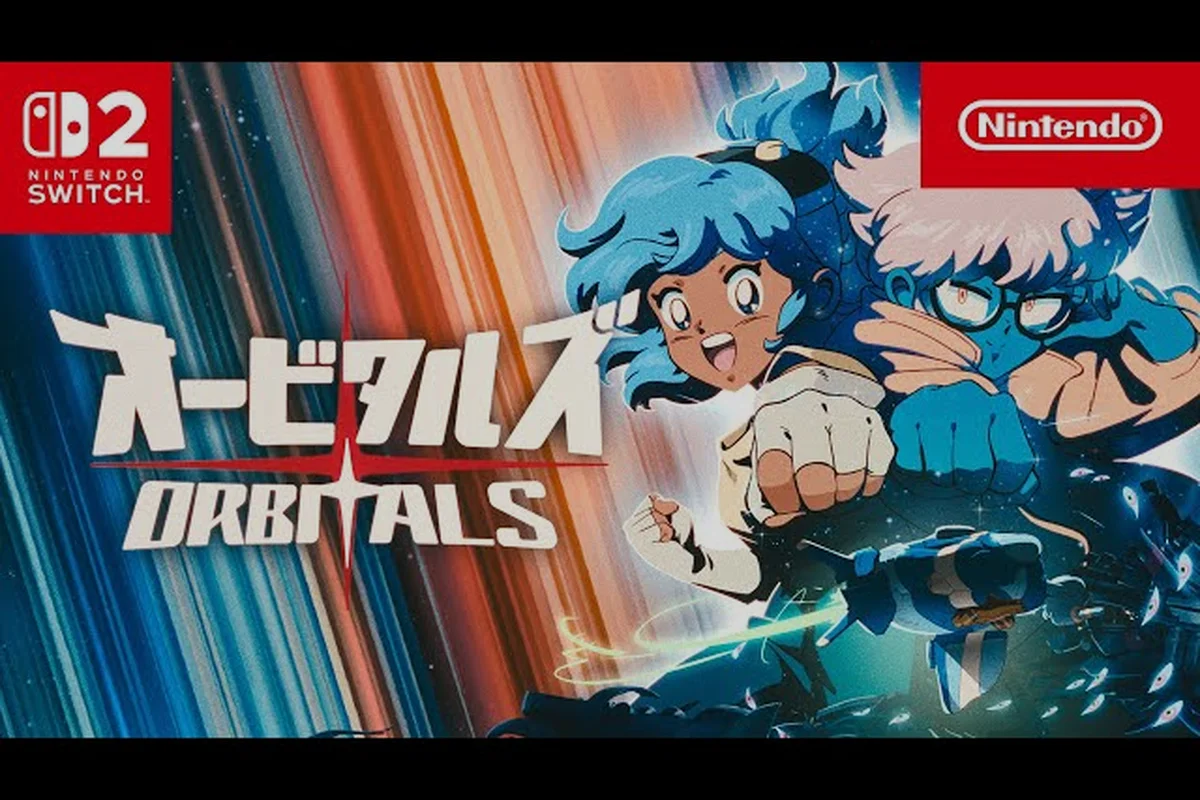
Orbitals world building turns a two-player puzzle adventure into something far more memorable than the average co-op release. Developer Shapefarm and publisher Kepler Interactive have crafted a retro anime space setting where a deadly storm, a fragile space station, and a quiet spiritual bond between two explorers carry as much weight as the gadgets and switch-pulling mechanics. The Orbitals space setting is not window dressing — it is the engine that drives the Orbitals story inspiration, the puzzle structure, and the emotional arc. Understanding how the Storm Wall, the home the explorers are trying to save, and the spiritual themes all interlock is the key to understanding what Orbitals is actually trying to say.
The Orbitals Space Setting and Its Retro Anime DNA
The Orbitals space setting is rooted firmly in a hand-drawn, late-1980s and 1990s retro anime aesthetic. According to the Orbitals publisher page on Kepler Interactive, the game takes place in what the publisher calls a "lovingly crafted retro anime world," where Maki and Omura set out to save their home — a journey that forces them to push through the deadly Storm Wall. The visual language borrows heavily from cel-shaded character work, soft pastel nebulae, and the kind of wide, lonely vistas that anime space operas like Cowboy Bebop, Legend of the Galactic Heroes, and Studio Ghibli's aviation-era works made iconic. This is not a procedural sci-fi backdrop; every station panel, every cracked viewport, and every drifting debris field feels deliberately illustrated.
A Setting Built for Two
What separates the Orbitals space setting from a typical co-op backdrop is that the environment is engineered around asymmetry. The official Orbitals Wikipedia entry notes that the game is a two-player cooperative experience where "players must learn to use various tools and gadgets to open up new pathways and complete puzzles," and that gameplay is "asymmetrical, indicating that the two players must assume different roles and synergize with each other to succeed." The setting reflects that asymmetry at the level of architecture. Maki's traversal zones tend to be the station's interior guts — tight maintenance shafts, terminal rooms, and low-gravity cores. Omura's space leans into the exterior — EVA-adjacent hull patches, antenna arrays, and external scaffolding where the Storm Wall is visibly churning in the background.
Visual Pillars of the Setting
| Visual Pillar | What You See in Game | Storytelling Function |
|---|---|---|
| Pastel nebulae | Drifting pinks, ambers, and teals behind every viewport | Establishes loneliness and wonder simultaneously |
| Hand-drawn UI | Sketched HUD icons, paper-style maps | Reinforces the retro anime production lineage |
| Station geometry | Modular cylinders, solar sails, tethered modules | Gives puzzles a learnable internal logic |
| Storm Wall on the horizon | A swirling wall of violet and black, always visible from exterior segments | Functions as a constant pressure gauge on the narrative |
The Orbitals space setting is therefore doing two jobs at once. It is a play space with consistent rules that players can map in their head, and it is a mood canvas that primes the audience to read the story emotionally rather than mechanically.
The Storm Wall and the Orbitals Supernatural Storm
The Orbitals supernatural storm is not a weather event. The Storm Wall is presented as a sentient or at least quasi-aware phenomenon that orbits, encroaches, and ultimately threatens to swallow the home station that Maki and Omura are trying to protect. Community reactions to the announcement trailer — embedded below — repeatedly highlight the way the Storm Wall reads less like a hurricane and more like a living presence, which is what pushes Orbitals into the realm of soft supernatural sci-fi rather than hard space engineering drama.
The trailer, hosted on the official Orbitals announcement trailer for Nintendo Switch 2 by Nintendo of America, establishes several visual motifs that recur throughout the rest of the game: the wall is rendered in bruised purples and deep blacks, it pulses rather than simply moves, and debris caught inside it seems to dissolve rather than tumble. None of this is over-explained by in-game text. Instead, the Orbitals story inspiration asks players to infer that the storm is something closer to a cosmic or spiritual force than a meteorological one.
How the Storm Shapes Puzzles
The supernatural storm is not a background prop. It is woven into the core game loop through a running pressure mechanic that the duo has to manage in every chapter, directly tied to puzzle state rather than story beats. Because the Storm Wall encroaches on the home station and the cleared puzzle zones, every solved panel eventually has to be defended, re-anchored, or surrendered during a Pulse Event. This turns exploration in the orbitals space setting into a resource budget: the pair decides whether to push deeper, retreat to stabilize Station Drift, or split up to cover the glitching EVA terminals before Environmental Static cuts their communication entirely.
| Pressure Layer | In-Game Manifestation | Player Response |
|---|---|---|
| Storm Proximity | Visible distance to the Storm Wall on the map HUD | Faster traversal routes become riskier |
| Station Drift | The home station slowly lists off-axis as the wall draws near | Players must re-anchor modules to keep the level playable |
| Environmental Static | Lights flicker, terminals glitch, EVA signals drop | Adds communication friction between the two players |
| Pulse Events | The wall contracts in waves, forcing reset of cleared puzzles | Encourages a steady pace rather than over-exploration |
By tying the supernatural storm directly to puzzle state, the designers make the threat feel ambient rather than scripted. The deeper reading for those who want Orbitals themes explained is that the storm is doing the work of a ticking clock without ever flashing a literal countdown timer.
Storm as Symbolic Antagonist
If you peel away the mechanical layer, the Storm Wall functions as the story's symbolic antagonist. It represents the inevitability of loss, the home the duo cannot outrun forever, and the spiritual test the pair must pass before they can claim any kind of peace. That is why Orbitals meaning explained articles and videos almost always circle back to the storm first — it is the gravitational center of the entire narrative, and the Orbitals supernatural storm is what gives the setting its weight.
Orbitals Spiritual Themes and the Bond Between Maki and Omura
The Orbitals spiritual themes are the most personal layer of the world building. The setting and the storm create the stage; the spiritual themes give the two protagonists their reason to act. Across the chapters, Maki and Omura are framed less as colleagues and more as two halves of a single wandering soul, separated by an unnameable loss and brought back together by circumstance.
The Language of the Bond
The script deliberately avoids romantic overtones in favor of a more ambiguous spiritual kinship, treating the Maki–Omura tether less as a love story and more as a mythic bond rooted in Orbitals spiritual themes. Several recurring motifs — the mirrored gear loadouts, the choral hum that surfaces when the tether reaches full extension, and the echoed dialogue beats around sacrifice and home — carry the weight of Orbitals meaning explained for players who want to read the bond symbolically rather than literally, particularly those who engage with the Orbitals supernatural storm as a metaphor for liminal transformation rather than a purely environmental hazard.
-
Mirrored gear loadouts: Maki's scanner and Omura's tether are presented as complements — one perceives, the other anchors. The duo literally cannot progress without synchronized use.
-
Tether physics: When the tether is fully extended, background audio shifts to a softer, almost choral hum. Community testers have noted this subtle cue as a recurring "spiritual" signal in shared sessions.
-
Echoed dialogue beats: Key lines — particularly around sacrifice and home — are repeated by both characters at different points, which has led community writeups to describe their relationship as a "call and response" structure rather than a traditional dialogue arc.
-
Final-chapter convergence: The closing sequence collapses the asymmetric roles the duo carried all game into a single shared action, which many players have read as the spiritual resolution of their bond.
For a closer read on how the bond's "call and response" structure feeds into the ending's liminal transformation, our walkthrough of the Orbitals story explained breaks down the chapter-by-chapter beats — including how the supernatural storm imagery is foreshadowed in Maki and Omura's earliest tether drills before it returns as the closing-act metaphor.
Why Spirituality Instead of Romance
Orbitals themes explained discussions often ask why the writers chose a spiritual register instead of a conventional love story. The most defensible reading, supported by the way Maki and Omura are framed in publisher materials and by the absence of explicit romantic language, is that the spiritual register lets the bond feel universal. A romance would lock the story into two specific characters; a spiritual bond lets players project their own meaning onto the pair, which fits the puzzle-adventure format where interpretation is part of the fun.
Orbitals Story Inspiration: Anime and Spiritual Lineages
The Orbitals story inspiration is openly drawn from a small canon of anime and manga traditions. The retro anime production design is the most visible surface, but the deeper narrative influences are the ones that explain why the Storm Wall, the home station, and the spiritual bond all feel so familiar to anyone who has watched late-night anime blocks.
| Influence | Where You See It in Orbitals | Function in the World |
|---|---|---|
| Studio Ghibli | Pastoral station interiors, quiet domestic moments, anti-war undercurrent | Grounds the home the duo is defending in something precious rather than abstract |
| Cowboy Bebop | Wandering explorer duo, jazz-tinged incidental score, melancholic loners in space | Sets the emotional pacing of the journey |
| Neon Genesis Evangelion | Apocalyptic supernatural threat, two pilots bound by fate, introspective cutscenes | Frames the Storm Wall as a test rather than a simple obstacle |
| Dragon Ball | Bold silhouettes, exaggerated poses during key emotional beats, hand-drawn energy effects | Gives key story moments a mythic, larger-than-life staging |
| Naruto / shōnen bond narratives | Maki and Omura as complementary opposites who must trust each other | Carries the spiritual bond theme through the action set-pieces |
A deeper dive into each of these references is available in our breakdown of the Orbitals anime inspirations, which maps specific frames and story beats to their source material. Combined, these influences are the Orbitals story inspiration that gives the game its recognizable tone: melancholic, optimistic, supernatural, and quietly spiritual all at once.
Why the Influences Matter for World Building
The reason these references are not just surface-level aesthetic is that they each contribute a structural rule. Ghibli's influence means the home station has to be worth saving in a human, domestic sense. Bebop's influence means the journey is allowed to be episodic and episodic-quiet. Evangelion's influence means the supernatural threat has to be symbolically charged. Dragon Ball's influence means the protagonists get room to be larger than life when the story demands it. None of these rules are stated outright, but every one of them shapes the Orbitals world building from level design to camera framing.
What Orbitals World Building Means for the Player Experience
Pulling all of these threads together, Orbitals world building is a deliberate, layered construction. The retro anime space setting gives the game a recognizable visual identity. The supernatural Storm Wall turns the environment into a constant pressure system that drives both puzzles and pacing. The spiritual themes between Maki and Omura provide an emotional core that survives even if the player never reads a single line of in-game text. And the Orbitals story inspiration from Ghibli, Bebop, Evangelion, and shōnen bond narratives gives every element a set of inherited rules that feel intuitive rather than arbitrary.
How the Layers Reinforce Each Other
| Layer | What It Does | How the Other Layers Support It |
|---|---|---|
| Setting (retro anime space) | Establishes tone and visual language | Gives the spiritual themes a stage that already reads as emotionally charged |
| Supernatural Storm | Provides mechanical and narrative pressure | The retro anime framing makes the storm feel mythic rather than technical |
| Spiritual themes (Maki and Omura) | Supplies emotional stakes | The storm acts as the catalyst that forces the duo to confront their bond |
| Anime story inspiration | Brings inherited narrative rules | Keeps all of the above consistent with audience expectations |
For players approaching the game as a co-op puzzle title first, the spiritual and symbolic layers can easily slip past unnoticed. For players approaching it as a story-first experience, the world building reveals itself in small visual and audio cues that reward slow, attentive play. Either way, the Orbitals space setting, the Storm Wall, and the Maki-Omura bond are doing the same job from different angles: turning a clever two-player puzzle game into a story worth remembering.
Frequently Asked Questions
What is the Orbitals space setting inspired by?
The Orbitals space setting draws from retro anime traditions including Studio Ghibli's pastoral domesticity, Cowboy Bebop's wandering-in-space melancholy, and Neon Genesis Evangelion's apocalyptic supernatural framing. These influences show up in the hand-drawn cel art, the lonely station interiors, and the symbolic weight given to the Storm Wall.
What exactly is the Storm Wall in Orbitals?
The Storm Wall is a supernatural phenomenon that orbits and encroaches on the home station Maki and Omura are trying to save. It is not a normal weather event; the wall pulses, dissolves debris, and reacts to player progress, which is why community discussions frame it as a sentient or spiritual force rather than a meteorological hazard.
What are the main spiritual themes in Orbitals?
The central spiritual themes revolve around the bond between Maki and Omura, framed as a call-and-response kinship rather than a conventional romance. Themes of home, sacrifice, and reunion are carried through mirrored equipment loadouts, tethered movement, and a final chapter that symbolically merges the two roles into one shared action.
How does the retro anime style affect Orbitals world building?
The retro anime style gives the world an immediately readable emotional vocabulary. Pastel nebulae, hand-drawn UI elements, and wide station vistas prime the audience to read the story symbolically, which is what allows the spiritual themes and the supernatural storm to land without heavy exposition.
Is Orbitals a romantic story or a spiritual one?
The narrative deliberately leans spiritual. There is no explicit romantic language between Maki and Omura, and the way the writers frame their bond — through mirrored gear, tether physics, and a culminating convergence sequence — points toward a more universal, almost mythic connection rather than a conventional love story.