
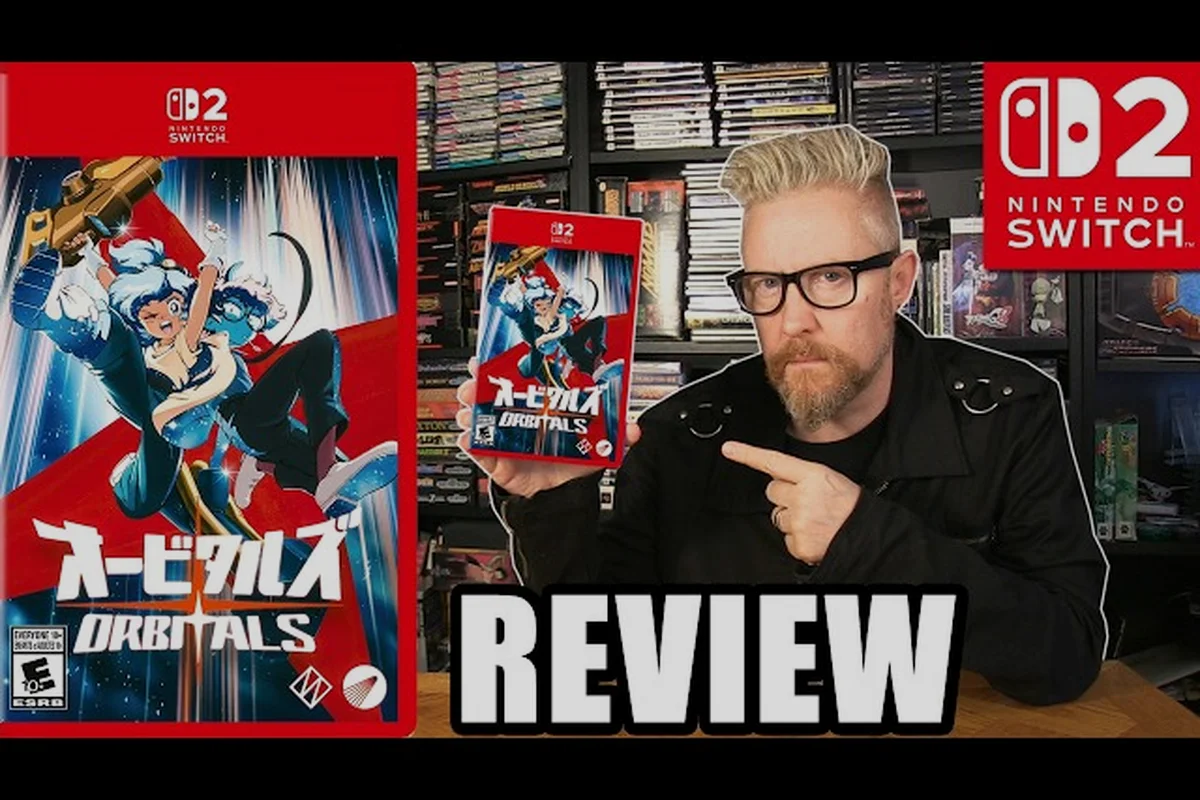
Orbitals things to know before you play start with a single, hard truth: this is a 2-player co-op puzzle adventure built around asymmetric roles, and going in blind almost guarantees a frustrating first hour. The game, developed by Shapefarm and published by Kepler Interactive, drops players into a retro anime world where Maki and Omura must work together to outrun the deadly Storm Wall, and every puzzle gate demands that both characters contribute something unique. Knowing the roles, the gadget kit, and the Friend's Pass quirks before the first screen loads saves hours of trial-and-error and turns the experience into a smooth ride from the prologue onward.
What Makes Orbitals Gameplay Explained in a Nutshell
Orbitals gameplay explained in the simplest terms: two players, two roles, one shared screen. The game runs on the Nintendo Switch 2 at $39.99, and the entire campaign is built around co-op. Maki and Omura are not interchangeable avatars. Each one carries a toolset tuned to a different puzzle-solving philosophy, and the level design constantly shifts obstacles so only a coordinated pair can clear them. The Storm Wall acts as a persistent timer in the back of every chapter, and failing to move forward fast enough triggers escalating environmental hazards that pressure the duo into tighter communication loops.
The asymmetric split is not cosmetic. According to the Orbitals official Kepler Interactive publisher page, the game demands "brains, heart, and unyielding resolve," and that demand is enforced mechanically. One player is built for reach and traversal, the other for brute-force interaction with heavy machinery. If a duo tries to brute-force a puzzle with one role, they will hit invisible gates that simply refuse to budge. The game rewards players who learn each role's identity before diving into the first puzzle room, which is why the next section breaks the asymmetry down in detail.
The Two Roles at a Glance
| Aspect | Maki | Omura |
|---|---|---|
| Primary Strength | Range, scanning, and light traversal | Heavy lifting, machinery, and anchor holds |
| Typical Gadget | Long-reach tool, area scanner, signal flare | Wrench kit, magnetic anchor, pressure plate |
| Puzzle Style | Opens paths, reveals hidden switches | Activates mechanisms, holds doors, powers turbines |
| Risk Profile | Fragile, must keep distance from hazards | Tanky, often exposed to direct danger |
| Co-op Duty | Scout ahead, mark objectives, relay info | Execute heavy steps, cover Maki's exposure windows |
Why the Storm Wall Changes Everything
The Storm Wall is not a background visual. It is the campaign's pacing engine, and it forces a rhythm that solo players can never replicate. Each chapter has a soft checkpoint, and the duo must reach it before the wall closes the playable area. According to the Orbitals Wikipedia entry, the storm "must be prevented from destroying a space station," and that prevention is scored both by speed and by puzzle-completion accuracy. Duos that ignore the timer end up replaying entire rooms because the game re-routes them when the wall catches up.
Orbitals Beginner Tips: Roles, Gadgets, and the First Hour
Orbitals beginner tips all start with one habit: talk before you touch. The game's puzzles are built so that one player almost always has the trigger and the other has the receiver. If Maki finds a recessed switch, Omura usually needs to be standing on a pressure plate across the room to keep the gate open long enough for the action to register. New players who rush into rooms without calling out what they see waste minutes on failed attempts that a single sentence would have solved. A useful warm-up ritual is to spend the prologue's tutorial room with one player watching and the other acting, then swapping roles, so both players feel the rhythm of trigger-and-receiver before the difficulty curve ramps.
The Starter Gadget Kit
| Gadget | Carried By | Best Use Case | Common Mistake |
|---|---|---|---|
| Signal Flare | Maki | Marks hidden switches across the room | Firing it at the wrong angle wastes the cooldown |
| Magnetic Anchor | Omura | Locks a door open while Maki passes through | Setting it too late, after Maki is already inside |
| Area Scanner | Maki | Highlights interactive objects through walls | Over-relying on it, ignoring visual cues |
| Wrench Kit | Omura | Repowers dormant machinery | Swinging at machines that are already active |
| Pressure Plate Trigger | Both | Holds a path open during a sequence | Stepping off too early, collapsing the window |
For a deeper breakdown of how every tool interacts with the environment, our Orbitals core mechanics guide maps out the full gadget list, including the mid-game unlocks that change how duos approach the heavier chapters. The starter kit is intentionally limited so players learn the core loop without being overwhelmed, but by Chapter 3 the gadget pool expands and the puzzle logic gets noticeably denser.
Communication Patterns That Actually Work
Orbitals co-op runs on three communication patterns, and picking the wrong one is one of the most common orbitals mistakes to avoid. The first is call-and-confirm: one player names an object, the other confirms they see it before anyone acts. The second is role-narration: each player narrates their next action out loud, which prevents two players from triggering the same gate at the same time and locking each other out. The third is silent rhythm, used during timed sections where speech is too slow, relying on a pre-agreed count or visual cue. Mixing these patterns mid-puzzle is a frequent newbie error that creates the same deadlocked state as if neither player had spoken at all.
Orbitals How to Play Co-op Without the Friend's Pass Headaches
Orbitals how to play co-op cleanly comes down to understanding the Friend's Pass system, which is one of the most distinctive features in the entire release. The Friend's Pass is a free companion app that lets a second player join a session even if they do not own the full game. Only the host needs to purchase Orbitals at $39.99; the second player downloads the Friend's Pass app, pairs with the host, and joins in. This lowers the barrier to entry for casual duos, but it also introduces quirks that the official website flags as common stumble points.
According to the Orbitals official game website, the Friend's Pass app is part of the "Ways to Play" lineup alongside the local co-op demo and pre-order options. The app pairs via a short code, and the second player streams the game from the host's Switch 2. Because the streaming depends on the host's hardware, the second player's input lag is slightly higher than a local-couch second player, and the video stream can dip during heavy puzzle sections. New duos should run the prologue twice on the same couch before going online, so the second player learns the controls without lag layered on top.
Friend's Pass vs Local Co-op vs Full Game
| Mode | Who Needs to Own It | Connection Type | Input Latency | Best For |
|---|---|---|---|---|
| Full Game + Full Game | Both players | Local or online | Lowest | Long campaigns, competitive puzzle runs |
| Full Game + Friend's Pass | Only the host | Online (streaming) | Slight | Casual duos, distance play, trying before buying |
| Local Co-op Demo | Nobody | Same Switch 2 | Lowest | First-time tryouts, tutorial practice |
The Friend's Pass also gates some progress. A second player using the pass can play through the full campaign with the host, but they cannot host their own session or carry progress into a friend's save. If the duo wants to swap who hosts, the second player needs to upgrade to the full game. This is one of the orbitals mistakes to avoid for duos who assume the pass is permanent: plan ownership before Chapter 4, because mid-campaign ownership swaps break save continuity and force a restart.
For a full walkthrough of pairing codes, app permissions, and the upgrade path, our Orbitals Friend's Pass explained guide covers every quirk the official site leaves implicit, including the rare desync bug that requires both players to back out to the title screen and rejoin.
Orbitals Mistakes to Avoid Before You Load In
Orbitals mistakes to avoid cluster into four patterns, and recognizing them early is the single biggest advantage a new duo can buy themselves. The first pattern is role-confusion, where both players try to do the same job. Because Maki and Omura have visibly different toolkits, it is tempting to assume either role can solve any puzzle, but the level design enforces asymmetry. The second pattern is inventory neglect: the gadget wheel has a cooldown, and spamming the wrong tool at the wrong time is the fastest way to soft-lock a room. The third is timing drift, where one player rushes ahead and breaks the trigger-and-receiver rhythm. The fourth is save neglect: the game autosaves at soft checkpoints, but if the duo quits during a failed attempt, the wall of progress behind them resets, and replaying 15 minutes of room-clearing is a real time tax.
The Most Common Stumble Points
| Mistake | Why It Happens | Fix |
|---|---|---|
| Both players grabbing the same puzzle | Roles feel interchangeable in the tutorial | Assign one player to "trigger," the other to "receiver" each room |
| Spamming the gadget wheel | Panic during a Storm Wall chase | Designate one tool as the panic default and stick to it |
| One player sprinting ahead | Impatience during quiet puzzle stretches | Agree on a "no step" line at the start of every new room |
| Quitting after a failed room | Frustration without checking the autosave | Look for the glowing checkpoint marker before restarting |
| Ignoring the Friend's Pass pairing code | App permissions or wrong region | Restart both devices, re-pair, and confirm before booting the campaign |
The Prologue as a Practice Run
The prologue is the game's built-in tutorial, but it is also the safest place to test every communication pattern, gadget combination, and Friend's Pass pairing before the difficulty curve hits. Skipping it is one of the orbitals beginner tips that experienced players give most often. According to the official Nintendo eShop listing for Orbitals, the game launches September 3, 2026, and the prologue runs roughly 30 to 45 minutes, depending on how much the duo experiments. Treat that half-hour as a paid investment, not a cutscene to fast-forward through.
Orbitals How to Play Co-op Through the Late Game
Orbitals how to play co-op past Chapter 4 shifts from "learn the roles" to "optimize the rhythm." The late game introduces multi-stage puzzles where the duo must hold three or more triggers in sequence, sometimes while the Storm Wall is closing in. At this point, the trigger-and-receiver pattern expands into a chain: player A holds a door, player B activates a turbine, player A releases the door, player B enters a new room, and so on. Duos that internalize this chaining rhythm in the early chapters hit the late game with a measurable advantage, while duos who learned the game through brute force tend to hit a wall around Chapter 5.
Difficulty Curve Snapshot
| Chapter | Average Puzzle Complexity | Storm Wall Pressure | Common Stumble |
|---|---|---|---|
| Prologue | Single-step triggers | None | Skipping the tutorial |
| Chapters 1–2 | Two-step triggers, basic gadgets | Soft timer | Role-confusion |
| Chapters 3–4 | Three-step chains, mid-game gadgets | Active timer | Inventory neglect |
| Chapters 5–6 | Multi-stage chains, environmental hazards | Tight timer | Timing drift |
| Finale | Synchronized sequences under wall pressure | Maximum | Communication collapse |
A practical late-game rule is to never enter a new room without naming the trigger and the receiver out loud. That single sentence is the difference between a clean solve and a five-minute reset loop, and it costs almost no time to deliver.
Building a Duo Routine
The most efficient duos run a four-step routine before every new room: scout, assign, narrate, execute. Scout means one player looks at the room from the entry point and calls out anything suspicious. Assign means the duo picks who holds which role for this specific puzzle. Narrate means each player says their first action before they take it. Execute means they run the sequence and adjust on the fly. This routine is the heart of the orbitals gameplay explained at a competitive level, and it scales from the prologue all the way to the finale without modification.
If you want a more granular breakdown of the room-by-room pacing and the chapter-by-chapter story beats, our Orbitals game length guide maps out the full campaign structure, including how many hours each chapter tends to take for first-time and experienced duos.
Final Setup Checklist Before Launch Day
Orbitals things to know before you play can be condensed into a 10-item checklist that new duos should walk through before launch day on September 3, 2026. Running this list takes about 20 minutes and saves several hours of avoidable frustration across the campaign.
| Step | Action | Why It Matters |
|---|---|---|
| 1 | Confirm both players understand Maki vs Omura roles | Prevents role-confusion in the prologue |
| 2 | Install the Friend's Pass app on the second player's device | Avoids pairing scramble on launch day |
| 3 | Run a local co-op demo session | Calibrates control feel without input lag |
| 4 | Agree on a communication pattern (call-confirm, narrate, or silent rhythm) | Sets the duo's default coordination style |
| 5 | Identify a "panic default" gadget per role | Prevents gadget-wheel spam during chases |
| 6 | Designate a trigger and receiver for the first puzzle | Builds the chain habit early |
| 7 | Check Switch 2 firmware is updated | Friend's Pass streaming depends on current firmware |
| 8 | Plan ownership before Chapter 4 | Prevents mid-campaign save continuity breaks |
| 9 | Bookmark the official site for updates | Patch notes drop here first |
| 10 | Set a soft checkpoint expectation | Keeps frustration low if a room resets |
Wrapping Up
Orbitals rewards duos who prepare, not duos who try to brute-force their way through asymmetric puzzles. The game's identity lives in the gap between Maki and Omura, and every chapter is engineered to widen that gap until both players learn to think as a single, two-bodied unit. Walk in with the roles mapped, the Friend's Pass understood, and a communication pattern already agreed, and the campaign opens up into one of the most inventive co-op puzzle experiences on Switch 2.
Frequently Asked Questions
What is Orbitals and who develops it?
Orbitals is a 2-player co-op puzzle adventure developed by Shapefarm and published by Kepler Interactive, launching September 3, 2026 on Nintendo Switch 2. The campaign follows Maki and Omura, two space explorers racing the Storm Wall to save a space station from destruction. The game is built entirely around asymmetric roles and shared puzzle-solving.
How does the Friend's Pass work in Orbitals?
Only the host needs to own the full game. The second player downloads the free Friend's Pass companion app, pairs with the host using a short code, and streams the game from the host's Switch 2. The pass covers the full campaign but does not allow the second player to host their own session or carry save progress into a different host's file.
Can I play Orbitals solo, or is co-op required?
Orbitals is designed as a two-player experience, and the asymmetric roles are enforced at the level design level. While solo play is technically possible in some early rooms, the campaign's puzzle logic and Storm Wall pacing both assume two coordinated players. Playing solo significantly increases difficulty and removes the trigger-and-receiver mechanics that define the game.
What ESRB rating does Orbitals have, and how long is the campaign?
The ESRB rating is Fantasy Violence, Animated Blood, and Mild Language. The campaign is built around 6 main chapters plus a prologue, and average completion for first-time duos runs roughly 8 to 12 hours depending on puzzle efficiency and how much time is spent experimenting with the gadget kit.
Does Orbitals support cross-progression or cloud saves?
The game saves locally to the host's Switch 2, and progress is tied to the host's profile. The Friend's Pass second player does not retain progress between hosts. Cross-progression and cloud save support have not been confirmed by Kepler Interactive as of the current pre-release window, so duos should plan ownership before Chapter 4 to avoid save continuity issues.