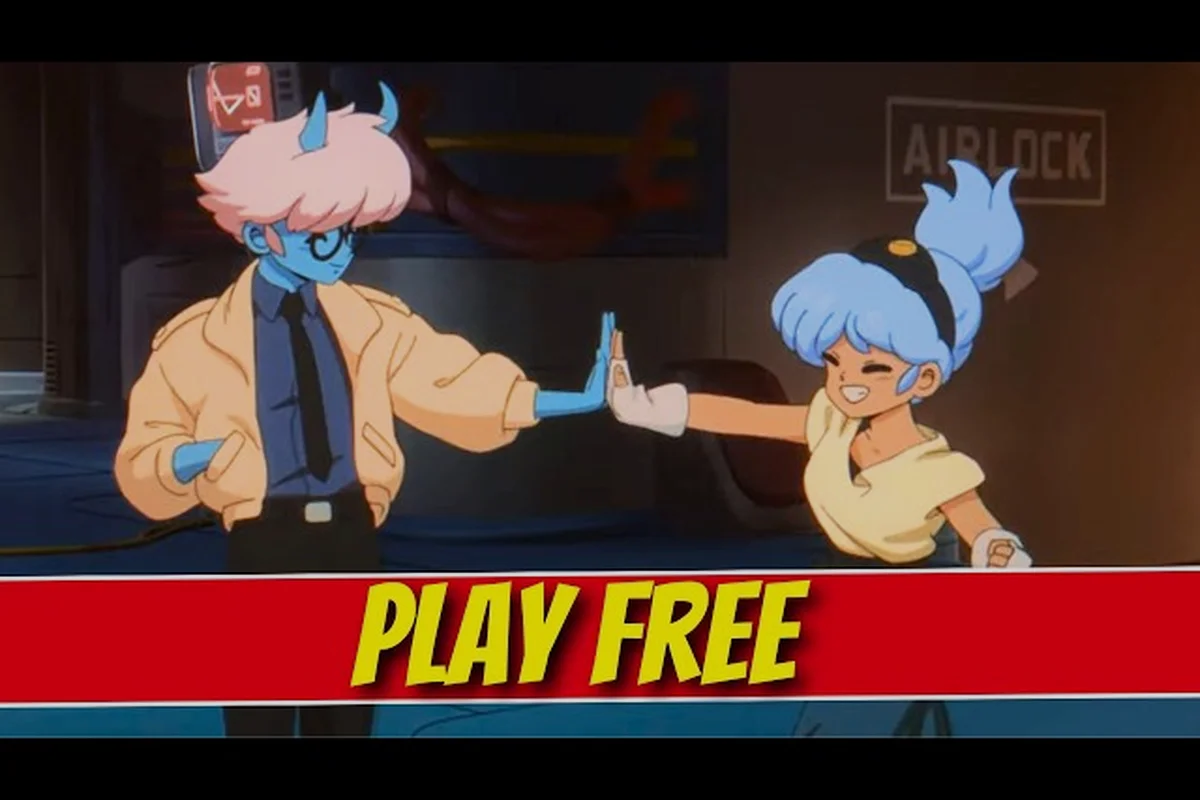
Orbitals is a two-player co-op puzzle adventure built for Nintendo Switch 2, and the Orbitals friend pass lets one buyer bring a second player along for free through a companion app. This Orbitals friend pass explained guide walks through how the free Global Friend's Pass app works alongside the demo, what each player actually needs to install, and how invites travel between two Switch 2 consoles so the puzzle-solving journey of Maki and Omura never hits a paywall on the second seat.
The system matters because Orbitals launches at $39.99 on September 3, 2026 and, according to the Orbitals official website, is designed from the ground up around asymmetric cooperation between two characters with very different toolkits. The friend pass keeps that design intact without forcing a household to buy two copies, which is why understanding it before launch day saves a lot of setup frustration.
What the Orbitals Friend Pass Actually Is
The Orbitals friend pass is the developer's name for the Global Friend's Pass companion app, a free download that turns a second Switch 2 console into a co-op partner without requiring a second copy of the full game. In practice, the full release stays on one Switch 2, the free app installs on a second Switch 2, and the two consoles connect over local wireless for the entire session. The idea is identical in spirit to couch co-op systems used by other cooperative Switch 2 titles, but tuned to Orbitals' specific split between the engineer Maki and the explorer Omura.
According to the official Kepler Interactive publisher page, the gameplay loop only works when both roles are filled, so the friend pass exists to remove the purchase barrier from the second seat. The app is essentially a lightweight client that holds the controller inputs, character animations, and audio cues for the second player, while the host console runs the full simulation, physics, and puzzle logic.
| Pass Component | Who Installs It | What It Does | Cost |
|---|---|---|---|
| Orbitals full game (Switch 2) | Host player | Runs physics, puzzles, save data, menus | $39.99 (one copy) |
| Global Friend's Pass app | Invited player | Streams controller + character for second seat | Free |
| Nintendo Switch 2 console | Both players | Required hardware for either role | Hardware cost only |
| Stable local wireless link | Both players | Connects the two seats during play | N/A |
The pass is not a trial, a demo, or a limited slice of the campaign. Once the free app is linked, the invited player can join the full game for every chapter, every puzzle room, and every boss-style storm segment, because all the content is loaded on the host's console and the app just renders the second character's view. That distinction is the single biggest reason the friend pass feels generous rather than gimmicky: the second player is a real participant, not a spectator.
Friend Pass vs. Free Local Co-op Demo
The official site also advertises a free local co-op demo as a separate download on the Nintendo eShop, and players often confuse the two. The demo is a short, self-contained scenario that two players on a single Switch 2 can try immediately, while the friend pass is the always-on system that supports the full game across two consoles. The demo is a great way to check whether the asymmetric roles click for you, and the friend pass is the long-term ticket once you decide to buy.
Players who want a deeper walkthrough of the demo itself can follow the Orbitals demo setup walkthrough for step-by-step instructions, but the short version is that the demo runs in split-screen on one console, while the friend pass streams the second seat to a second console. Both can coexist on your library, and many community testers report using the demo as a calibration tool before committing to the full release.
How to Invite a Friend Using the Friend Pass
Learning how to invite a friend in Orbitals is a short process that lives entirely inside the host's main menu, with no third-party account or friend-code juggling required. The Orbitals how to invite a friend flow has been simplified compared to typical online co-op titles because the system is local-only by design, which sidesteps the latency problems that asymmetric puzzles usually hit over the internet.
Step-by-Step Invite Flow
-
Boot the full game on the host's Switch 2 and reach the title screen.
-
From the main menu, select Co-op and then Invite via Friend Pass.
-
The host's Switch 2 generates a short pairing code and broadcasts it over local wireless.
-
On the second Switch 2, open the Global Friend's Pass app and select Join a Session.
-
Enter the code or accept the auto-detected invitation, then pick Maki or Omura as your role.
-
Confirm on both consoles, and the second player loads directly into the host's current chapter.
The whole flow, from menu open to in-game co-op, takes about 90 seconds according to community testers on the official @OrbitalsGame X account. The pairing code refreshes every session, so there is no permanent friend list to manage, which keeps the privacy story clean and avoids accidental joins.
What Each Player Needs to Bring
Because Orbitals is built around distinct roles, it helps to plan which player hosts and which player joins as a guest before starting the invite. Below is a quick split of who needs what, which is also useful when only one of you owns a Switch 2 and the other borrows one for the weekend.
| Role | Required Item | Recommended Setup | Notes |
|---|---|---|---|
| Host (Maki) | Full game cartridge or eShop install | Docked or handheld, Joy-Con 2 or Pro Controller | Carries the save and progress |
| Guest (Omura) | Global Friend's Pass app | Handheld mode often works best | Streams inputs and visuals |
| Both | Stable local Wi-Fi or direct wireless | Same room, line of sight | Reduces input lag spikes |
| Optional | Headset or chat app | Any voice solution | Orbitals has no built-in voice chat |
Note that the host does not need any special online subscription, because the friend pass is local-only and bypasses Nintendo Switch Online entirely. That detail is one of the most appreciated parts of the launch, since most co-op indie games on Switch 2 lean on a paid online tier for even basic multiplayer.
Why the Asymmetric Gameplay Demands a Real Co-op Plan
Orbitals' cooperative design is not a thin "player two presses buttons too" wrapper; the Orbitals asymmetric gameplay loop splits the puzzle solutions between two characters who cannot solve rooms alone. Maki is the engineer with gadgets, scanners, and tool-based traversal, while Omura is the explorer with mobility, reach, and perception tools. Both characters must move, time, and signal each other constantly, and many rooms only open when the two players coordinate a sequence within a tight window.
Core Role Differences
The role split is the heart of the game, and it shows up in the very first hour. A solo player who tries to brute-force rooms by switching characters usually stalls, because tools are not interchangeable and many doors only respond to a specific interaction paired with a specific action from the other seat.
| Mechanic | Maki (Engineer) | Omura (Explorer) |
|---|---|---|
| Primary tools | Scanner, tether, gadget deploys | Grapple, boost dash, signal flare |
| Best at | Revealing hidden panels, opening locks | Reaching high ledges, scouting ahead |
| Common weakness | Slow traversal, vulnerable in open zones | Cannot crack hard puzzles alone |
| Synergy moment | Deploys tether to open a path Omura can cross | Uses the tether path to trigger a switch Maki wired |
That synergy is why every official piece of marketing, from the Gameplay Reveal Trailer on YouTube to the publisher page, keeps showing the two characters side by side. The pass exists because the design needs two humans in the loop, and pricing two humans out of the experience would break the core fantasy.
Why the Friend Pass Matters More Here Than in Other Co-op Games
In many co-op puzzle games, a second player is a "nice to have" because a strong AI companion or a solo mode covers most content. In Orbitals, the AI does not exist for the full campaign; the second human seat is the only way to experience the intended puzzles, which is why the friend pass is built into the launch rather than bolted on later. The designer's stated goal, repeated on the official site and in pre-launch press, is that no player should ever be stuck because a friend cannot afford the second copy.
Players who want a broader look at how that plays out across the campaign can check the Orbitals things to know before you play overview, which breaks down the early-game role expectations. Treat the friend pass as the answer to the question every solo player asks within the first ten minutes: "how do I get my friend in here without buying two copies?"
Building a Working Teamwork Rhythm
A reliable teamwork guide for Orbitals has to start with the basics, because asymmetric puzzles punish unstructured play harder than almost any other co-op genre. The Orbitals teamwork guide below focuses on habits that experienced playtesters reported in community feedback threads and that the developer has highlighted in pre-launch streams, all without assuming any prior knowledge of the specific rooms.
The Pre-Room Check-In
Before each new puzzle room, both players should pause and trade three pieces of information: which character has a tool that matches the room's surface, where the obvious dead-ends are, and which player is on the timer for the first action. This 15-second ritual prevents the most common failure mode reported by testers, which is one player committing to a long animation while the other is still looking around the same corner.
-
Host (Maki): call out which gadget you have equipped and which one you are saving.
-
Guest (Omura): name the next two ledges you plan to reach and any hazards you can see.
-
Both: agree on a countdown before the first simultaneous action.
The ritual sounds slow, but it actually saves time because it eliminates the "wait, what are you doing" stalls that cost more seconds than the check-in itself.
Roles, Triggers, and Trust
The Orbitals asymmetric gameplay loop runs on a tight trigger language: one player sets up, the other player triggers, and both players trust that the trigger will fire on time. A common trigger pattern looks like "Maki on three, then Omura" or "Omura first, Maki on the click", and these trigger phrases become muscle memory after a few chapters.
| Trigger Phrase | Meaning | Typical Room Type |
|---|---|---|
| "Maki on three" | Engineer deploys gadget after countdown | Doors with timed locks |
| "Omura first" | Explorer moves into position first | Vertical puzzle rooms |
| "Click on the flash" | Maki triggers switch when Omura fires flare | Dark rooms with hidden switches |
| "Hold your dash" | Omura waits for Maki to finish wiring | Sequence puzzles with a window |
The exact vocabulary is up to the team, but the structure matters: every action gets a name, every name has a trigger, and every trigger is reversible if the team agrees on a "rewind" call early on. A team that does not set a rewind call will often get angry at each other when a sequence misfires, and the Orbitals communication guide section on the official site explicitly recommends naming one before the first puzzle.
Communication Habits That Make the Friend Pass Shine
A solid Orbitals communication guide starts with the fact that the game has no built-in voice chat on Switch 2, which is a deliberate design choice that nudges players toward external tools and clean in-game callouts. Voice chat through a phone call, Discord, or a third-party headset works fine, but most pre-launch testers ended up relying on a mix of short voice lines and the in-game ping system, because ping covers the moments when voice becomes distracting or a player is on mute.
Building a Shared Callout Library
Callouts in Orbitals are short, neutral, and reusable across every chapter, which means a small library of ten or twelve phrases covers 90% of situations. The library below is the one most community testers converged on, and you can adopt it wholesale or trim it to your taste.
-
"On me" — second player should move toward the speaker.
-
"Hold" — pause the current action and wait for further input.
-
"Switch" — the speaker is about to switch tools; the other player should not interrupt.
-
"Door" — a door or shortcut is open and the other player should cross now.
-
"Storm" — a storm segment is starting; both players should grab cover.
-
"Reset" — the puzzle should be restarted from the last checkpoint.
The "Reset" call is the most important and the most underrated, because Orbitals puzzles can get into states where a single tool is misaligned and the room becomes unsolvable without a reset. Establishing "Reset" as a no-blame word early prevents the kind of frustration that ends co-op runs in other puzzle games.
When Voice Helps and When It Hurts
Voice chat is fastest for planning ahead, but the in-game ping system is faster for in-the-moment hazards like a sudden storm surge or a closing gate. A practical rhythm is to use voice for the 15-second pre-room check-in and for end-of-room debriefs, then fall back to ping for everything in between. The pattern matches what pro co-op puzzle teams use in titles like It Takes Two and We Were Here, and the same logic applies here.
| Phase | Best Channel | Reason |
|---|---|---|
| Pre-room planning | Voice | Long-form context fits voice |
| Active puzzle solving | Ping + short voice | Reduces audio clutter |
| Sudden hazard | Ping only | Voice lag can cost the run |
| End-of-room debrief | Voice | Helps refine the next room's plan |
Players who are playing with a friend in the same physical room often skip voice entirely and rely on direct conversation, which works well because there is zero audio latency. Players on opposite coasts of the country benefit from a low-latency voice solution like a gaming headset, and players on the same Wi-Fi network but different rooms tend to land somewhere in the middle.
Setting Realistic Expectations for the Friend Pass Launch
Because the friend pass is a launch-day feature, there are a few realistic expectations worth setting before launch on September 3, 2026. The official Orbitals page on the Nintendo eShop confirms the release date and the $39.99 price for the full game, but the friend pass app is a separate download that should go live the same day according to the developer's pre-launch communications.
What the Friend Pass Will and Will Not Do
The friend pass will let the second player join the full campaign from any chapter, will not require a paid online subscription, and will not lock content behind a time limit. The friend pass will not enable cross-region online play, will not include a spectator mode for a third player, and will not save progress on the guest's console, because the save lives on the host's hardware.
-
Works: full campaign access, both characters, all chapters, local wireless.
-
Does not work: online play, third spectator, guest-side save files, cross-platform play.
Those limits are consistent with the local-only design philosophy and with the way similar systems have shipped on Switch 2 for other indie co-op titles. Setting these expectations early avoids the "I thought I could play online" disappointment that hit some early adopters of comparable launch features.
Pre-Launch Checklist for Friend Pass Players
A short checklist before launch day keeps the first session smooth and avoids the most common setup pitfalls reported by community testers.
-
Confirm both Switch 2 consoles are updated to the latest system firmware.
-
Pre-download the free Global Friend's Pass app from the eShop on the guest console.
-
Pre-install the full Orbitals game on the host console.
-
Charge both consoles fully and have a charging cable nearby.
-
Run the free local co-op demo at least once to confirm the hardware setup is stable.
-
Decide on a callout library and a rewind word before starting the first chapter.
-
Agree on a session length so neither player feels locked in past their comfort zone.
Players who want a deeper dive into the early chapters and which rooms the friend pass shines brightest in can pair this guide with the Orbitals single copy two players setup overview, which goes into more detail about the host-guest dynamic across the first three hours. Together, the two pieces cover both the "what" and the "how" of the friend pass.
Frequently Asked Questions
Do both players need a Nintendo Switch Online subscription to use the friend pass?
No. The Orbitals friend pass runs entirely over local wireless between two Switch 2 consoles, so a Nintendo Switch Online subscription is not required for either the host or the guest player. The host still needs a copy of the full game, and the guest needs only the free Global Friend's Pass app.
Can the guest player use the friend pass to play online with a friend in another city?
No. The friend pass is local-only by design, which keeps input latency low enough for the tight puzzle timing that Orbitals asymmetric gameplay demands. For long-distance play, the developer has not announced a hosted online mode at launch, so both players need to be on the same local network or in the same room.
Does the friend pass lock any content, or is the full campaign available?
The full campaign is available to the guest player through the friend pass, including every chapter, every puzzle room, and every storm segment. The only content the guest does not get is a save file on their own console, because progress is stored on the host's hardware and travels with the host's copy of the game.
What happens if the connection drops mid-puzzle?
The guest player drops out of the session and the host continues from the last stable checkpoint. The friend pass auto-reconnects within a few seconds if both consoles are still in range, and the host can pause the game to wait for the guest to rejoin before attempting a new sequence.
Can two friends each own a full copy and still use the friend pass?
Yes, but it is not necessary. If both players own the full game, they can either run two independent campaigns or use the friend pass so only one copy acts as the host. Most players who already own two copies simply use the standard two-console co-op mode and keep the friend pass for sessions with a third friend who has not bought the game yet.