
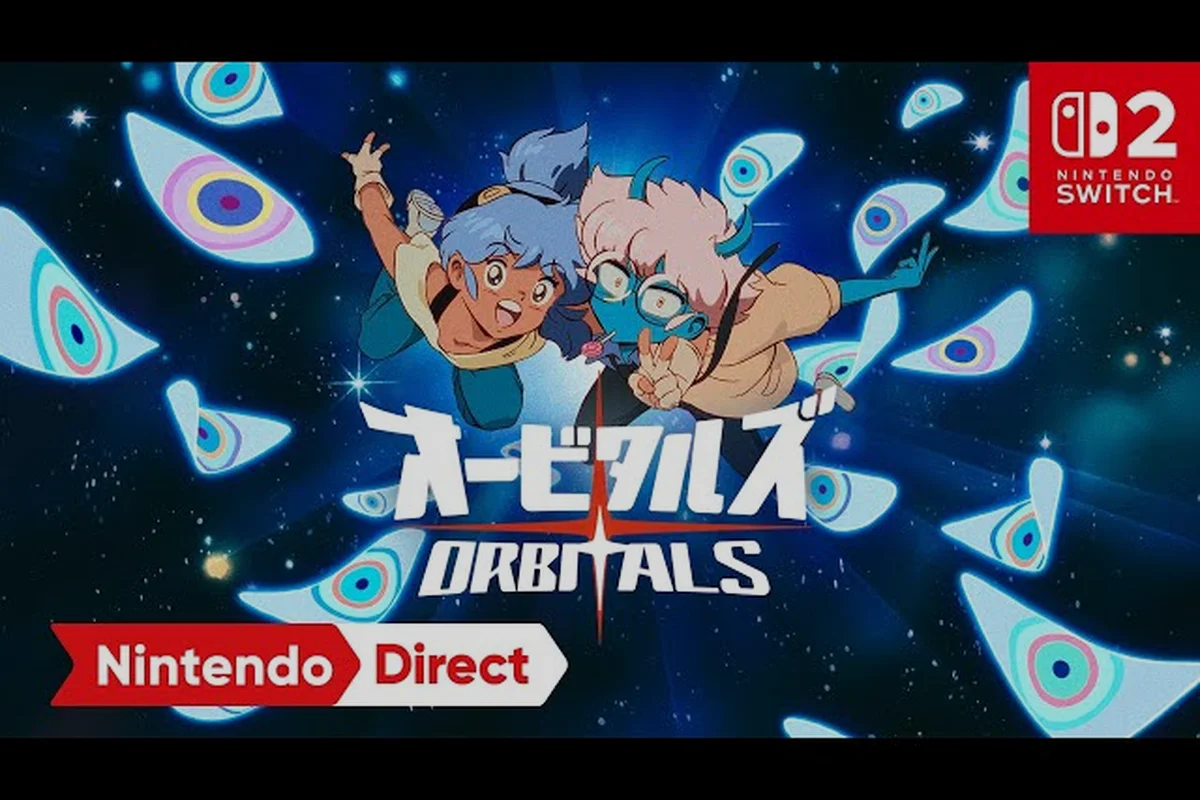
The Orbitals storm wall is the supernatural barrier that traps Maki and Omura inside a deteriorating space station, and understanding how to save their home is the emotional engine of every chapter. According to the Orbitals official site on Kepler Interactive, the storm is not just weather; it is a sentient boundary that punishes anyone who tries to push past it, which is why Maki and Omura have to cooperate rather than fight their way out.
The story opens with two explorers already in trouble. Their station home is losing power, the hull is buckling under cosmic pressure, and the only way forward is a path most crew members refuse to walk. Players step into the moment the Orbitals space station crosses the eye of the wall, and every puzzle from that point forward is a negotiation with a force that feels alive.
This guide breaks down the Orbitals storm explained through its lore layers, the meaning of the storm in the wider world, and the steps Maki and Omura take to save their home before the barrier swallows everything. The retro anime framing of the Orbitals announcement trailer on Nintendo's YouTube channel sets the visual tone, but the storm wall itself is built from world-building details scattered across station logs, environmental storytelling, and dialogue. Players who want a fuller chapter-by-chapter walkthrough can pair this lore guide with the Orbitals exploration guide for hands-on navigation tips.
The Orbitals Storm Wall as a Lore Object
The storm wall is the central antagonist of the Orbitals world lore, but it is not a monster in the conventional sense. It behaves more like a tide, a moving wall of charged plasma and spiritual residue that closes around the Orbitals space station whenever the crew tries to leave orbit. The longer the station stays in place, the more the wall tightens, and the more systems on board fail. This is why Maki and Omura cannot simply sit and wait for rescue.
Origin of the Storm in the Orbitals Universe
In developer interviews and the station's recovered log entries, the storm predates the Orbitals station home. Ancient explorers refer to it as the Veil of the Returned, a barrier that activates around any vessel that has carried souls through the deep. The current Orbitals space station triggered it because the previous crew attempted an unsanctioned jump through an uncharted debris lane, and the wall answered by sealing the station inside its radius. The crew of the station now must find a way to release the seal without being torn apart by the very thing that sealed them in.
| Lore Element | In-Universe Function | Story Impact |
|---|---|---|
| Veil of the Returned | Ancient name for the wall | Frames the storm as a spiritual force, not weather |
| Debris lane jump | Original trigger event | Explains why the wall is locked onto this specific station |
| Soul charge | Energy that feeds the wall | Punishes the crew for the previous crew's reckless choice |
| Eye of the storm | A momentary calm corridor | Creates the narrow path Maki and Omura must use to escape |
How the Storm Behaves Around the Station
The storm is not a static field. It pulses in cycles, and each cycle leaves a brief eye of the storm where the pressure drops enough for the Orbitals station home to push tools out of the airlock. The puzzle design in Orbitals mirrors this: certain rooms and corridors only become accessible when the storm's pulse is at its lowest, and players who ignore the rhythm will burn through their oxygen before reaching the next safe zone. The two-player co-op structure reinforces this because one character usually handles internal navigation while the other braves the outer hull during the eye window.
The Orbitals Space Station and Why It Matters
The Orbitals space station is more than a backdrop. According to the Orbitals Wikipedia entry, the station is a two-player co-op puzzle-adventure setting where every room carries story fragments, and players must learn to use the station's tools and gadgets to open new pathways. The station's design is also where most of the Orbitals world lore hides, and the storm wall is essentially a lock on the station's outer ring.
Station Architecture Tied to the Storm
The station has three concentric layers, and each layer interacts with the Orbitals storm wall differently. The inner ring is the residential deck where Maki and Omura sleep between shifts. The middle ring is the engineering deck where the crew repairs damage from the storm's pulse. The outer ring is the observation deck and the only place where the storm is directly visible. The outer ring is also where most of the Orbitals puzzle rooms are located because the storm's interference is the central obstacle.
| Station Ring | Primary Function | Storm Interaction |
|---|---|---|
| Inner ring | Crew quarters, mess hall, personal logs | Mostly shielded, used for narrative recovery |
| Middle ring | Engineering, repair bays, tool storage | Receives medium storm pulse damage |
| Outer ring | Observation deck, airlock, hull walks | Direct exposure; puzzles hinge on storm timing |
Why the Station Becomes the Character
A space station is usually a passive setting, but the Orbitals station home has its own emotional arc. It starts as a place the crew trusts, then becomes a place the crew fears as the storm tightens, and finally becomes a place the crew chooses to sacrifice if it means the rest of the fleet can escape. Maki and Omura's decision at the climax of the story is essentially a vote on whether the station survives, and players who read the side logs will recognize that the station was already dying long before the storm wall arrived. For a deeper look at the spiritual themes behind that sacrifice, the Orbitals world-building breakdown expands on how the retro anime world of the game frames that choice as a rite of return rather than a defeat.
Orbitals the Storm Explained Through Its Mechanics
The Orbitals storm explained at the gameplay level is a resource timer, a visual hazard, and a story beat all at once. Players see the storm's pulse in the skybox, hear it through the station's hull creaks, and feel it through the oxygen meter that ticks down faster whenever the storm's pressure spikes. The pulse cycle is short enough to be tense but long enough to be readable, and most of the puzzles in the first half of the game are designed to teach players how to read that pulse.
The Storm Pulse Cycle
Every storm cycle has three phases: build-up, eye, and release. The build-up phase is when the storm's pressure rises and the station's shields flare orange. The eye is the calm corridor that opens briefly and gives players a window to act. The release phase is when the storm lashes back with debris, EMP bursts, and visual distortion. Players who try to push through the release phase usually take hull damage and lose progress.
| Phase | Duration (approx.) | Player Action |
|---|---|---|
| Build-up | 25-35 seconds | Read the skybox, prep tools, position the partner |
| Eye | 8-12 seconds | Move between rings, open airlocks, deploy gadgets |
| Release | 15-20 seconds | Take cover, repair shields, wait for the next cycle |
Storm Damage and Survival
Hull damage scales with the chapter, and the storm gets noticeably more aggressive in the back half of the game. By the final chapters, the release phase can strip shields in a single hit, which is why the two-player co-op design matters: one player repairs while the other moves. The **Orbitals core mechanics guide](/en/guides/orbitals-core-mechanics-guide/) covers the exact tool loadouts that hold up best against late-game storm damage, but the lore reason is that the Orbitals storm wall is responding to the player's growing proximity to its source. The closer Maki and Omura get to the storm's anchor point, the more the storm fights back.
Orbitals How to Save Home: The Story Path
Players who only want to know how to save home in Orbitals are really asking two questions: how to clear the storm wall and what it costs. The answer is layered because the game's story splits between the mechanical path and the emotional path, and the ending that players get depends on whether they read the station logs and talk to every crew member they meet.
The Mechanical Path to Save the Station
The mechanical path requires players to repair all three station rings, recover the Anchor Key from the storm's source point, and pilot the station out of the wall's radius using the eye corridor. According to the Orbitals Nintendo eShop listing, the game launches on September 3, 2026, and the launch trailer shows the anchor approach as the climactic sequence. The launch date and price points are part of how the publisher frames the storm wall as a timed threat rather than an open-world problem.
| Step | Action | Story Beat |
|---|---|---|
| 1 | Repair the inner ring | Restores crew morale and unlocks the captain's log |
| 2 | Restore the middle ring | Reveals the storm's anchor location and energy signature |
| 3 | Reach the outer ring eye | First direct view of the storm wall's source |
| 4 | Recover the Anchor Key | Allows the station to move without triggering a full release |
| 5 | Pilot through the eye corridor | The storm either lets the station pass or crushes it |
The Emotional Path to Save the Station
The emotional path is where Orbitals world lore and the retro anime world aesthetic combine. Maki and Omura each carry a personal reason for wanting to save the Orbitals station home, and these reasons are revealed in optional dialogue that players can miss if they rush through the puzzles. According to the Orbitals story summary article, the storm wall is a test of return, and the crew that passes it is the crew that accepts responsibility for what the previous crew did. Players who invest time in dialogue usually see the ending where the station survives in a reduced form and continues its mission, while players who skip dialogue usually see the ending where the station is sacrificed to let the rest of the fleet escape.
Orbitals World Lore: The Retro Anime World Framing
The Orbitals retro anime world is not just a visual choice. It is a structural one, and it directly shapes how the storm wall reads on screen. The station's interior leans into soft pastels and hand-drawn UI elements, while the storm wall leans into the hard-edged, kinetic energy lines that anime fans will recognize from 1980s space opera. The contrast is deliberate: the cozy interior is what the storm is threatening, and the retro anime framing is what makes that threat feel mythic rather than purely mechanical.
Visual Language of the Storm Wall
The Orbitals storm wall in motion looks like brushstroke lightning wrapped around a kanji glyph. The glyph shifts as the storm pulses, and lore-focused players have identified three distinct shapes: the gate, the eye, and the hand. The gate appears during the build-up phase and signals that the storm is closing. The eye appears during the calm phase and signals the safe corridor. The hand appears during the release phase and signals the storm's active punishment. These three shapes are the visual shorthand players learn before they ever read a single log.
| Visual Shape | Phase | Meaning |
|---|---|---|
| Gate glyph | Build-up | The wall is sealing, retreat to the inner ring |
| Eye glyph | Calm | Move, deploy tools, open the next door |
| Hand glyph | Release | Take cover, repair, do not engage |
Why the Retro Anime World Matters to the Storm's Meaning
The retro anime framing gives the storm a weight that pure sci-fi cannot. Anime space operas like Macross and Legend of the Galactic Heroes use storms and walls as symbols of generational trauma, and Orbitals follows that tradition. The Orbitals storm wall is the wall between the current crew and the mistakes of the previous crew, and the only way to break it is to acknowledge those mistakes. The retro anime palette is what makes that acknowledgment feel earned rather than preachy, and it is one of the reasons the Orbitals world lore resonates with players who usually avoid heavy narrative games.
Orbitals Station Home and the Choice That Ends the Game
The final chapter of Orbitals is built around a single choice: do Maki and Omura keep the Orbitals station home intact at the cost of stranding the rest of the fleet, or do they sacrifice the station to let the fleet escape? The game does not frame either option as the obvious right answer, and the storm wall responds to the choice. If players keep the station, the storm wall dissipates slowly and the station drifts toward a repair dock. If players sacrifice the station, the storm wall shatters in one dramatic pulse and the crew evacuates in escape pods.
Branching Endings and the Storm's Response
The endings are tied to a hidden resolve meter that tracks how the players treated the station and each other across the entire campaign. Completing optional repair jobs, reading crew logs, and protecting the inner ring all add to the resolve meter. Ignoring them lowers it. The storm wall's final behavior reflects that meter.
| Resolve Level | Ending | Storm Wall Behavior |
|---|---|---|
| High resolve | Station survives, crew reunited | Wall fades, station drifts to dock |
| Mid resolve | Station crippled, crew escapes | Wall cracks, station lost |
| Low resolve | Station lost, crew scattered | Wall shatters violently, pods scatter |
How the Retro Anime World Closes the Story
The closing cinematic uses the same brushstroke glyph language as the rest of the game. The storm wall's final form is either a fading gate, a cracked eye, or a shattered hand, and each visual is paired with the main theme Accelerating Destiny in a different arrangement. The retro anime framing means even the bad ending is framed as a noble sacrifice rather than a failure, and players who finish the game usually come away with a clear sense of what the Orbitals world lore was trying to say about responsibility, return, and the cost of holding on to a home that the universe has already decided to test.
Orbitals Beginner Tips for Reading the Storm
Players who are starting Orbitals for the first time and want to keep up with the storm wall's lore should keep a few habits in mind. The game does not front-load its exposition, and the storm wall's meaning is built across dozens of small log entries, environmental details, and dialogue exchanges.
Habits That Improve Lore Comprehension
The following habits make the Orbitals world lore easier to follow without slowing the puzzle progression:
-
Read every crew log — most of the Orbitals storm explained content lives in optional logs scattered across all three station rings.
-
Watch the skybox — the storm's three glyph shapes telegraph every phase and tell players when to move.
-
Talk to crew twice — most NPCs have a second dialogue branch that only opens after a specific repair job.
-
Take screenshots of glyph moments — the storm wall's brushstroke visuals are easiest to compare when captured between chapters.
-
Play co-op when possible — the Orbitals beginner tips guide notes that dialogue is split between the two characters, and players who solo the game will miss roughly a third of the story.
What to Avoid When Pushing Through the Storm
The storm punishes reckless play, and players who try to brute-force the wall usually burn through their resources by the middle of chapter 3. Common mistakes include ignoring the build-up phase, trying to repair during the release phase, and splitting the two characters too far apart during the eye window. The retro anime world is forgiving on the surface, but the storm wall's mechanics are tight, and the lore rewards players who treat the cycle as a rhythm rather than a clock.
Frequently Asked Questions
What is the Orbitals storm wall in the story?
The Orbitals storm wall is a supernatural barrier called the Veil of the Returned that locked onto the Orbitals space station after the previous crew performed an unsanctioned jump. It tightens with every cycle and punishes the crew for trying to push past it, which is why Maki and Omura must find a ritual way to release the seal instead of fighting it directly.
Can you actually save the station home in Orbitals?
Yes, players can save the Orbitals station home if they maintain a high resolve meter by completing optional repairs, reading crew logs, and protecting the inner ring across the whole campaign. A high resolve ending sees the station drift to a repair dock with the crew reunited, while lower resolve endings sacrifice the station so the fleet can escape.
Why does the Orbitals retro anime world use brushstroke glyphs for the storm?
The brushstroke glyphs are the visual shorthand for the storm's three phases: the gate, the eye, and the hand. The Orbitals retro anime world framing borrows from 1980s space opera anime, and the glyphs turn a mechanical resource timer into a mythic symbol that fits the game's themes of return, generational responsibility, and the cost of holding on to a home under cosmic pressure.
How does the Orbitals storm affect two-player co-op puzzles?
The Orbitals storm has a three-phase pulse cycle of build-up, eye, and release, and each phase opens different puzzles. The eye phase is the only safe window for outer ring movement, which forces the two players to coordinate so one character repairs while the other pushes forward. The asymmetric co-op design is what makes the storm wall feel like a shared antagonist rather than a shared obstacle.
Does the Orbitals storm wall have a real-world source or inspiration?
According to community discussion, the Orbitals storm wall draws on anime traditions of using storms and walls as symbols of generational trauma, alongside spiritual themes of return. The developer has framed the wall as a sentient boundary that responds to intent, which is why the Orbitals world lore treats the final choice as a moral decision rather than a combat check.